What a New Ursus C-4011 Tractor Cost in 1970: Archive Prices Compared with Grain
The Polish-built Ursus C-4011 tractor cost 91,400 zlotys in 1970, equal to 26 tonnes of wheat. Polish farming portal Farmer used period publications to show what such machines were worth.
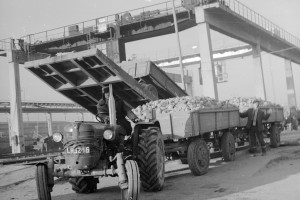
The Polish agricultural portal Farmer, drawing on the 1970 publication "Informator Agromy", has looked at what a new Ursus C-4011 tractor cost in Poland. The 42-horsepower model, produced in Poland from 1965 to 1970, sold for 91,400 zlotys, equivalent to 26 tonnes of wheat.
From Czechoslovakia to Poland
The model's roots lie in Czechoslovakia, where the Zetor 3011 Major was presented in 1960. It launched the UR-1 family of tractors, with two-, three- and four-cylinder versions. The four-cylinder model 4011, first shown in 1962, came to Poland under a licence agreement. It later grew into a tractor family that included the C-355 and C-360, produced until 1998.
"Informator Agromy" described the tractor as suitable for a wide range of farm work, including heavy soils. It had a glazed cab with an electric windscreen wiper and a pneumatic system for trailers with air brakes.
Prices and comparisons
Centrala Handlowa Sprzętu Rolniczego, the agricultural equipment trading centre, listed the price at 91,400 zlotys for the basic version without a cab. For comparison, the Vistula KZB-3B cost 210,000 zlotys, the Ursus C330 cost 77,000 and a Fiat 125p car cost 160,000 zlotys.
According to Poland's Central Statistical Office, wheat was purchased in 1970 at an average of 3,500 zlotys per tonne, rye at about 2,400, barley at 3,100 and oats at about 2,200. Potatoes averaged 800 and sugar beet 600 zlotys per tonne. The tractor's price also equalled 38 tonnes of rye, 30 of barley, 42 of oats, 114 of potatoes or 152 of sugar beet.
The publication adds that a farmer could not simply buy a tractor at the time: shortages brought formal restrictions, and the still-scarce machines went first to state enterprises.