Real Estate Prices in 1937 Latvia: From Huts to Castles
A 1937 property catalog reveals that for a few thousand lats one could buy a house, while a castle or large farm cost tens of thousands. For comparison, the monthly salary of a trade company director was 640 lats.
Urban Houses
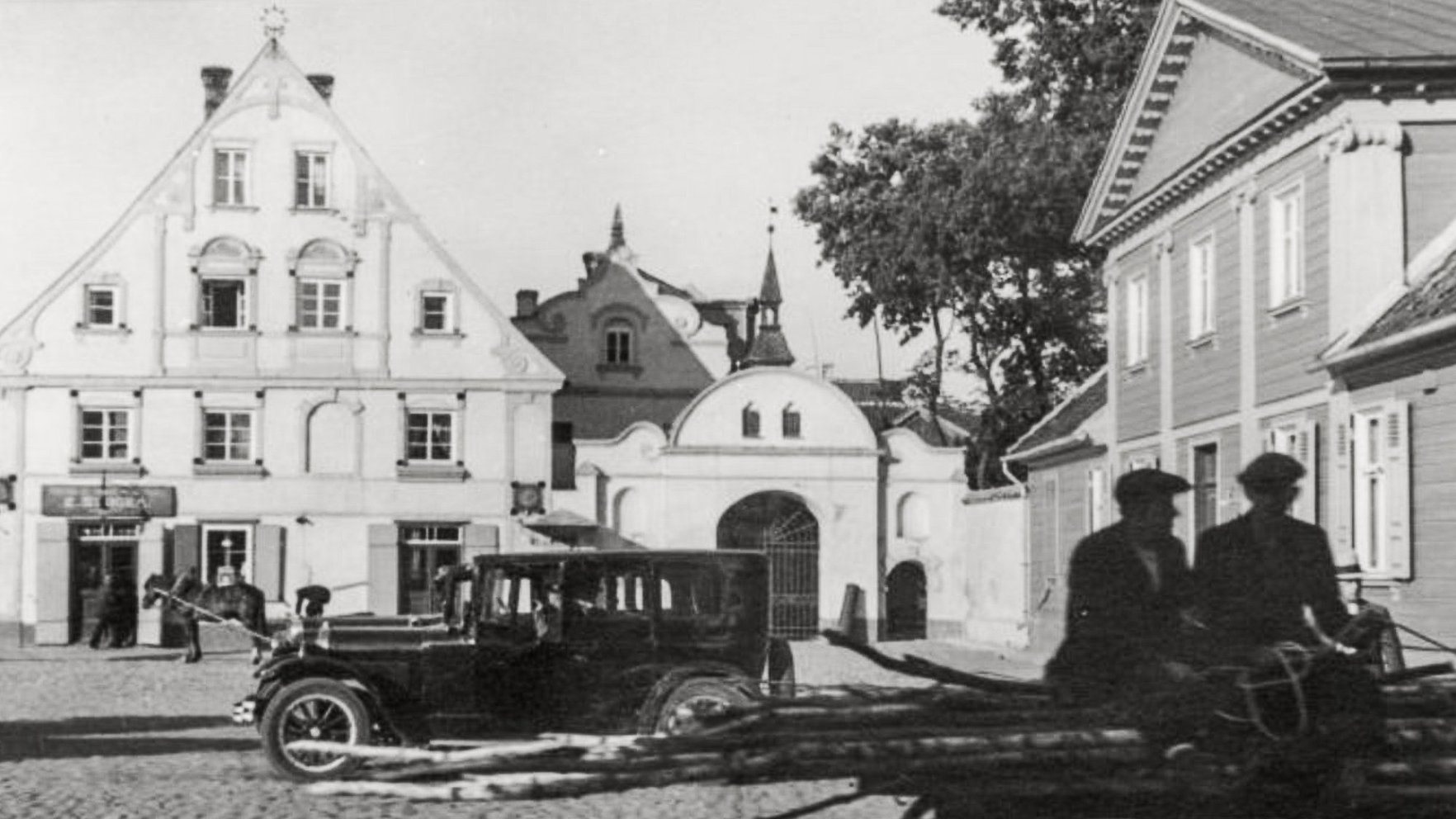
In 1937, the F. Jirgensons brokerage published a catalog listing 366 properties for sale, mostly in Zemgale but also from other regions and Riga. For example, in Jelgava near the center, a wooden house with three one-room apartments and 1000 m² of land cost 6,600 lats. A larger house with five apartments, two barns, and an orchard cost 7,200 lats. A modern brick house with two three-room apartments and an orchard was priced at 20,000 lats.
In smaller towns, prices were lower – in Auce, a new wooden house with ten one-room apartments and a large orchard cost 6,000 lats. In Jēkabpils, a wooden cottage with four rooms and a kitchen cost 5,000 lats, while in Bauska, a wooden house with two apartments, two shops, an inn, and electricity cost 15,000 lats.
In Jūrmala, prices were higher – two wooden houses in Asari with shops and apartments yielding a monthly income of 210 lats cost 18,000 lats. In Majori, two summer houses near the sea with 16 rooms, verandas, and brick cellars cost 15,000 lats.
Rural Farms
The catalog also included farmsteads. In Jelgava district, a 185-hectare farm with 111 hectares of arable land, 26 buildings, and live inventory (12 horses, 60 cows, 60 small livestock) cost 90,000 lats. A smaller 39-hectare farm with a wooden house cost 20,000 lats. In Aizpute district, a 44-hectare farm with a wooden house, brick barn, and shed cost 8,000 lats. New farms established after 1920 were cheaper – a 7.4-hectare farm in Bauska district with a house, barn, and shed cost 3,000 lats. The least expensive was a 2,775 m² plot in Dobele with a temporary hut and shed for 1,600 lats.
Manors and Castles
Manor centers, often awarded to Lāčplēsis Order knights after the agrarian reform, were frequently put up for sale. The catalog listed castles – for instance, in Jelgava district, a brick castle with 22 rooms, a large brick barn, and 13 hectares of land cost 35,000 lats. In Tukums district, a castle with 40 rooms, 18 auxiliary buildings, tiled roofs, and 56 hectares of land by a river cost 60,000 lats.
Salaries and Affordability
In 1937, wages varied between Riga and the provinces. A trade company director earned an average of 640 lats per month, a chemical engineer 365 lats, an accountant 255 lats, a cook 175 lats, and a janitor 72 lats. Women's wages were lower – a saleswoman earned 80 lats compared to a salesman's 140 lats. An exception was female accountants, who averaged 170 lats in 1936, while male accountants earned 160 lats.
Thus, a house costing 6,600 lats required about 4.5 years of a director's salary or over 7 years of a carpenter's salary. The 60,000-lat castle would require an accountant nearly 20 years, a cook nearly 29 years, and a carpenter about 41 years of work.
Loans
Mortgage loans were available for property purchases. The Latvian Mortgage Bank had granted 78.8 million lats to house owners by early 1938, while the State Land Bank had issued 113.3 million for building construction and 95.8 million for land purchases. After the 1934 Ulmanis coup, the government became more lenient toward struggling farmers – by the end of 1936, the State Land Bank had written off 44.1 million lats in loans.