Democratic support for Israel cracks: Nearly half the party votes to cut aid
A House amendment to strip $3.3 billion in security assistance to Israel failed, but 103 Democrats voted for it – nearly half the caucus – revealing a growing rift in the long-standing bipartisan consensus on Israel.
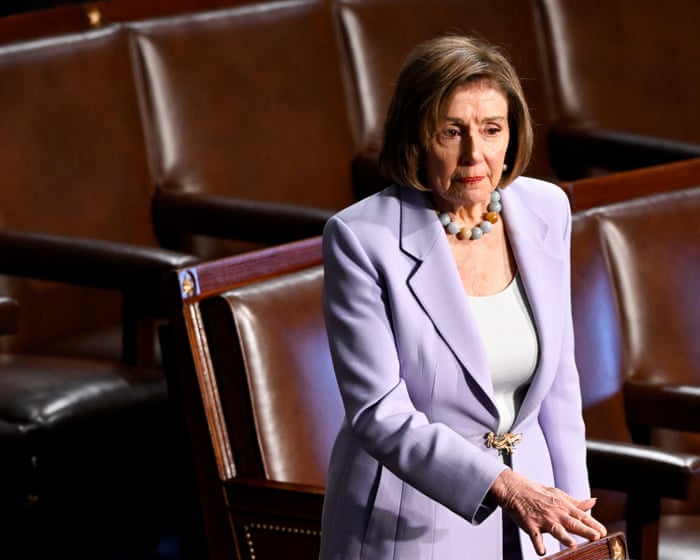
A House vote on Wednesday laid bare the deepening divide among Democrats over unconditional support for Israel. An amendment introduced by Kentucky Republican Thomas Massie, which would have eliminated $3.3 billion in security assistance to Israel from the State Department appropriations bill, was rejected 314-104. However, 103 Democrats – nearly half the caucus – voted in favor, including former Speaker Nancy Pelosi and Minority Whip Katherine Clark, who broke publicly with Minority Leader Hakeem Jeffries.
Jeffries had sent a letter urging Democrats to reject the amendment, but the whipping effort proved insufficient. Pelosi later called the amendment “ill-conceived” but said she supported it “for the message that it sends.” The measure, never destined to become law, instead served as a roll call measuring how much of the traditional bipartisan consensus on Israel still commands automatic loyalty.
The vote came amid shifting public opinion. According to the Institute for Global Affairs, only 16% of U.S. adults support continued unrestricted aid to Israel, and just 9% of adults under 30 from both parties agree.
Republican leaders allowed the amendment to reach the floor, a move seen as an attempt to force politically uncomfortable votes on Democrats ahead of the midterms. But it also exposed a growing willingness among Republicans to criticize Israeli influence. Notably, JD Vance recently accused unnamed figures “within Israel’s system” of undermining his diplomacy with Iran.
A more consequential battle lies ahead. The National Defense Authorization Act includes the U.S.-Israel Defense Technology Cooperation Initiative, which would deepen defense-industrial integration. Bernie Sanders has warned it would move the two defense establishments toward unprecedented integration with little congressional scrutiny. Massie and Representative Ro Khanna tried to remove the provision but were blocked in the House Rules Committee.
The two debates point to the same political reality: maintaining the bipartisan majority now requires active management, as leaders increasingly disagree with their own deputies. Democratic primaries this year elevated a cohort of candidates who ran explicitly against the old consensus and won, campaigning on cutting aid and calling Aipac money toxic. These candidates will head to Washington with mandates to reject the position Jeffries still defends.
Wednesday’s vote may be forgotten in the next news cycle, but the pattern it revealed – a bipartisan floor that has held for 50 years buckling from both directions – will not.