Ten years after India's demonetization, key promises remain unmet
A decade after India withdrew its largest banknotes in 2016, economists say the move did little to curb black money and corruption. Digital payments have grown, but the amount of cash in circulation has also risen.
On November 8, 2016, Indian Prime Minister Narendra Modi announced in a televised address that all 500- and 1,000-rupee banknotes would cease to be legal tender at midnight. The decision wiped out 86.9% of the value of the currency in circulation at once. Modi called on citizens to make a "grand sacrifice for cleansing our country" and promised the step would help tackle black money, corruption, counterfeit currency and terrorist financing. Ten years on, experts say those goals were largely not achieved.
The impact on daily life
Millions of Indians hurried to banks to exchange their savings. Long queues formed outside banks and ATMs, where people waited for hours. Workers missed wages, small businesses struggled to pay staff, and families found it hard to buy everyday essentials. There were also reports of deaths during the cash crisis. Jaipur businessman Prakash Patra told DW about his domestic help's father, who collapsed and died in a queue while trying to exchange the family's savings.
The poorest, rural women and people without bank accounts were hit hardest. Joe Athialy, executive director of the New Delhi-based financial watchdog Center for Financial Accountability, says the poor and those relying on the informal economy bore the greatest cost. Arun Kumar, a former economics professor at Jawaharlal Nehru University, argues the government wrongly assumed illicit wealth was held mainly in cash.
Did it end black money?
As early as 2018, the Reserve Bank of India (RBI), the country's central bank, reported that 99.3% of the withdrawn notes had returned to the banking system. That undermined hopes that large sums of undeclared cash would be wiped out. Economists note that illicit wealth in India is often held in property, gold and other assets. Whether any formalization of the economy or wider tax base can be attributed to the move remains disputed. Lekha Chakraborty of the National Institute of Public Finance and Policy points to research showing modest gains and temporary but real economic costs.
Digital payments
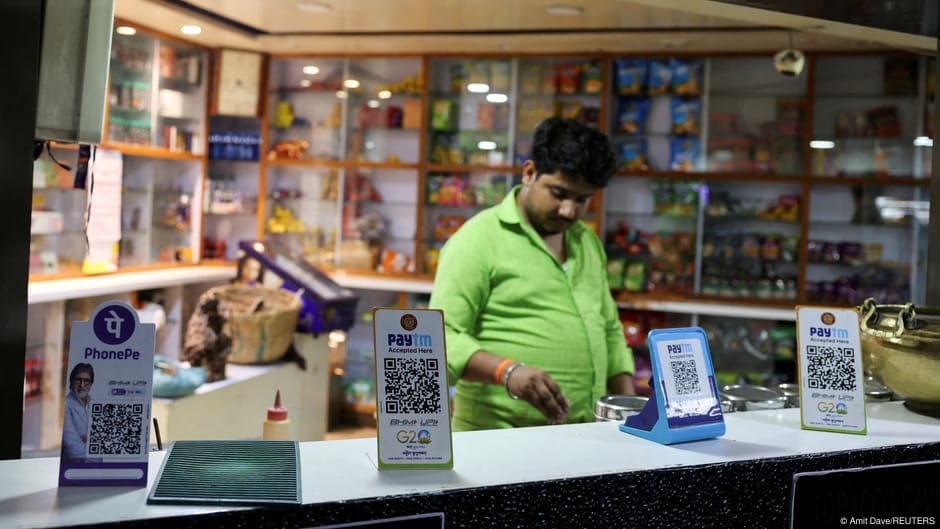
The Unified Payments Interface (UPI), launched in August 2016, is now a major part of India's retail payments. According to the RBI, it processed 241.6 billion transactions worth 314.2 trillion rupees (about €2.95 trillion) in 2025-26. Yet cash has not shrunk: banknotes in circulation were worth 43.15 trillion rupees on October 23, 2026, against 17.97 trillion in November 2016. Chakraborty cautions that digital payment growth continued a trend already under way before the ban.