A decade after S7's gamble, floating spaceport Sea Launch remains idle
Ten years ago, Russian airline group S7 bought the floating spaceport Sea Launch hoping to break into the commercial rocket market, but it hasn't launched anything in over 12 years. The war in Ukraine has left the project with no future.
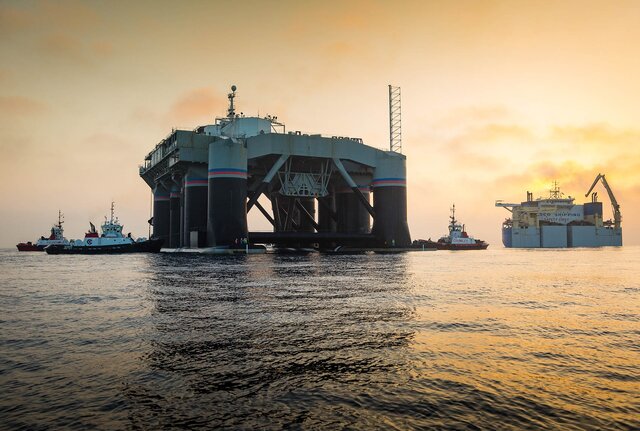
Ten years ago, on September 27, 2016, Russian airline group S7 agreed to buy the floating spaceport Sea Launch, aiming to become a major player in the commercial satellite launch business. At the time, the company's chief, Vladislav Filyov, was compared to Elon Musk. A decade later, however, the platform sits idle in Russia's Primorye region with no clear future.
Sea Launch was created in the 1990s by combining Soviet-era space technology with American and Norwegian capital and engineering. Its centerpiece was a converted oil platform, Odyssey, from which rockets launched from equatorial waters in the Pacific — a location that significantly boosts a rocket's payload capacity. The founding consortium included Boeing (40%), Russia's RSC Energia (25%), Norway's Kvaerner (20%), and Ukraine's Yuzhmash and Yuzhnoye (10% and 5%). The Zenit-3SL rocket used for launches was itself built with components from all three countries.
Since its first launch in 1999, the project absorbed roughly $3.5 billion in investment but never met financial expectations. Competition from rival rockets, several failures — including a launchpad explosion in 2007 — and a 2009 bankruptcy led to Russia's RSC Energia taking control of 95% of the shares in 2010. Over 15 years, Sea Launch conducted 36 launches, 32 of them successful.
After Russia's annexation of Crimea in 2014, cooperation with Ukraine collapsed, threatening the project's survival. In 2016, a deal in which Boeing obtained Soyuz seats to offer NASA helped settle much of Sea Launch's debt, paving the way for S7 to acquire the platform in 2018 with hopes pinned on a new Soyuz-5 rocket. Political barriers, however, blocked continued cooperation with Ukraine, and in 2020 the platform was relocated to Russia, losing some of its equipment in the process. Russia's 2022 invasion of Ukraine and the resulting sanctions ended any remaining commercial prospects for the project.