Dinosaur-killing impact crater may have teemed with life for millions of years
New research suggests the hydrothermal system created beneath the Yucatan Peninsula by the Chicxulub asteroid impact stayed hot for eight million years — four times longer than previously thought — creating conditions favorable for microbial life.
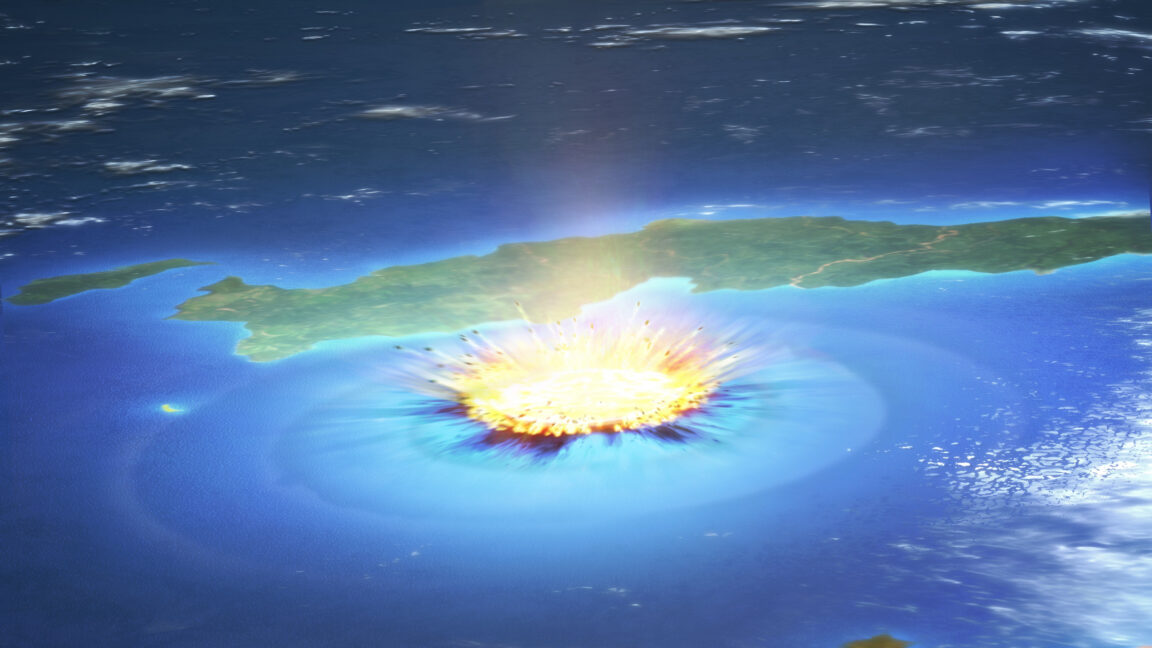
About 66 million years ago, the Chicxulub asteroid struck Earth, triggering the mass extinction that wiped out non-avian dinosaurs and countless other species. Yet the impact also left behind something unexpectedly life-friendly: a hydrothermal system beneath what is now the partially submerged Yucatan Peninsula.
When scientists drilled into the impact zone in 2016, they found that the collision's effects reached roughly 35 kilometers below the surface, melting vast amounts of rock. Exposure to seawater made that rock porous, and hot water seeping through those pores formed a hydrothermal system that could have drawn in microorganisms otherwise struggling to survive in the cold ocean depths.
A longer-lived system than assumed
A team led by geologist Annemarie Pickersgill of the University of Glasgow re-examined rock samples from the site and found that both the scale and duration of this hydrothermal system had been underestimated. Previously thought to have lasted around 2 million years, the new analysis shows it persisted at least four times longer — up to 8 million years.
Published in Communications Earth & Environment, the study notes that longer periods of hydrothermal activity create extended windows for prebiotic chemical reactions, the emergence of life, and the spread of microorganisms beyond their point of origin.
Dating the heat
To determine the system's lifespan, researchers used potassium-argon radioisotopic dating on feldspar samples, measuring how potassium-40 decays into argon-40. The results showed the hydrothermal system remained hot from the moment of impact 66 million years ago until about 58 million years ago. Computer simulations backed this up, showing temperatures stayed above 90°C for 1.5 to 2.3 million years and above 50°C — still warm enough to sustain microbial colonies — for up to 5 million years.
Of 70 known underwater impact craters with hydrothermal activity, microbes have been confirmed in only eight, so there's no direct evidence life actually colonized the Chicxulub crater. Still, the findings could help scientists understand how habitable conditions formed elsewhere on early Earth and on other planetary bodies.