Film on Amy Goodman charts decades of independent journalism and the East Timor massacre
A new documentary, “Steal This Story, Please!”, profiles veteran broadcaster Amy Goodman and her philosophy of covering stories from the perspective of those most affected. It includes her account of the 1991 Dili massacre in East Timor, where Indonesian troops killed 271 protesters.
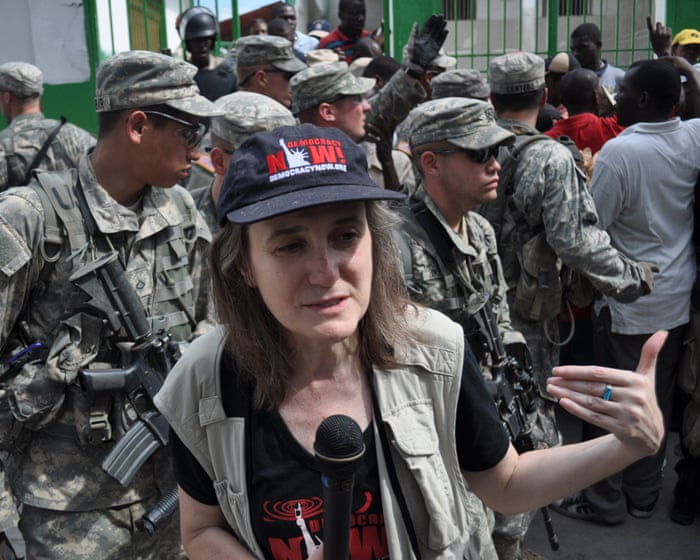
Amy Goodman, the presenter of Democracy Now!, says she considers an exclusive a failure. The new documentary about her career, “Steal This Story, Please!”, directed by Tia Lessin and Carl Deal, follows her work and her belief that important stories should be shared widely, not kept for one outlet. Goodman allowed the two Oscar-nominated filmmakers into her life to promote independent journalism, which she has practised for four decades.
Democracy Now! is an hour-long daily news programme based in New York, broadcast online and on public stations. It is supported by viewer donations and refuses advertising, sponsorship and government grants. Goodman stresses that war coverage is not brought “by the weapons manufacturers” and climate coverage not by fossil fuel companies. The film opens with her confronting Donald Trump’s climate adviser at the 2018 COP summit in Katowice, Poland; he tried to avoid her, complaining about harassment.
The documentary traces her career back to the 1980s and includes her reporting from East Timor. In November 1991, she and journalist Allan Nairn witnessed Indonesian troops open fire on a crowd at the Santa Cruz cemetery in Dili, killing 271 people. The soldiers beat them with rifles and boots; Nairn suffered a fractured skull. Goodman describes seeing a young boy with his hands raised in a V sign among the first to fall. Their testimony helped draw attention to the occupation, which ended with a 1999 referendum and independence for Timor-Leste in 2002.
Goodman says her role is to report from “the target end” of wars and disasters, giving voice to ordinary people. She rejects the idea that one story matters more than another, instead emphasizing the importance of covering movements over time. The film also marks Democracy Now!’s 30th anniversary with statements from activists and musicians, and recalls Martin Luther King Jr.’s 1967 anti-war speech at Riverside Church. The message, Goodman says, is to keep reporting and listening, so that people can tell their own stories.