Record Low Danube Levels Threaten Nuclear Power in Romania and Hungary
Prolonged heat and drought have pushed the Danube to record lows, threatening electricity generation in several countries. Hungary's Paks plant is running at just 10% capacity, while Romania's military has blasted rocks to keep cooling water flowing.
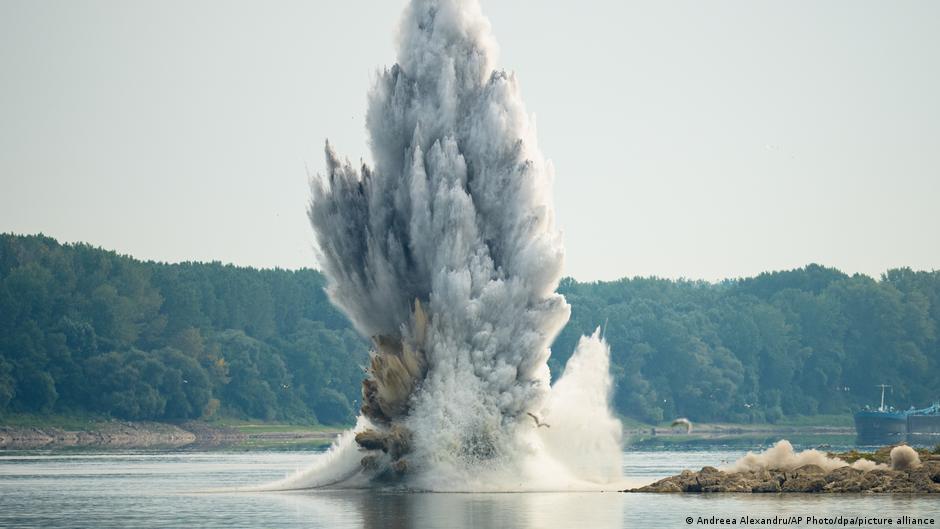
Several Central and Eastern European countries are grappling with power shortages and industrial disruption amid prolonged hot and dry weather that has driven the Danube and other waterways to record low levels.
Hungary narrowly avoided a complete shutdown of its Paks nuclear plant, which had been announced last week. However, the four-reactor station, typically providing nearly half of the country's electricity, was operating at slightly more than 10% capacity on Monday. Prime Minister Peter Magyar thanked the public for restraint, saying the grid was stable and consumption was well below planned levels. He also noted that water management forecasts for the upcoming days had become slightly more optimistic.
In Romania, the military detonated a rocky outcrop exposed by low water in a Danube branch to improve the flow of cooling water to the Cernavoda nuclear plant, which normally supplies about one-fifth of the nation's power. Defense Minister Radu Miruta called the operation a success but warned that the plant might need to shut down entirely by Thursday if the partial diversion fails. Caretaker Prime Minister Ilie Bolojan said automakers Dacia and Ford had agreed to suspend production until August 19 after a crisis meeting with energy-intensive industries, with other companies expected to follow.
Serbia's vast Iron Gate hydroelectric plant on the Danube was generating only about a fifth of its capacity on Monday. Prime Minister Djuro Macut convened an emergency meeting and appealed to residents to minimize use of high-consumption appliances such as air conditioners, describing the situation as serious and demanding.
Further upstream in Bavaria, Germany, low Danube levels are also hampering freight transport. New Transport Minister Steffen Bilger called the situation tense and said he would chair a crisis meeting on Thursday. He noted that low water is not unusual, but the problems are occurring unusually early in the year, with the potential for several more weeks of hot and dry weather.
/nginx/o/2023/12/20/15791292t1hc8f9.jpg)