Edinburgh show links Brecht's exile story to today's émigrés
A show at the Edinburgh festival, "Four Walls and a Roof", uses playwright Bertolt Brecht's story of exile to reflect on displacement today. It was created by Lebanese artists Lina Majdalanie and Rabih Mroué.
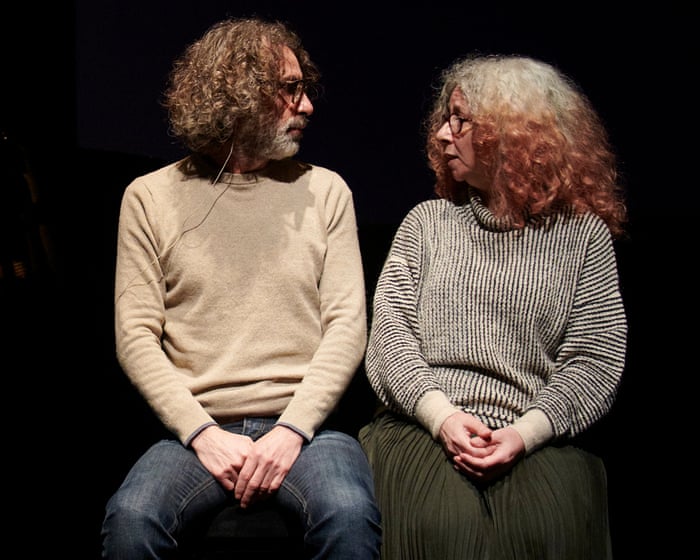
A production at Edinburgh's Studio theatre, running until 17 August, uses the life of playwright Bertolt Brecht to explore ideas of exile, home and identity relevant to today's displaced people.
The show, "Four Walls and a Roof", draws on Brecht's own term "cold execution" — describing how, during the era of the US House Un-American Activities Committee (Huac), opponents could be destroyed not through direct violence but by being cut off from their livelihoods, as happened to blacklisted artists barred from working in Hollywood.
The concept is explored by Lebanese artists Lina Majdalanie and Rabih Mroué, who themselves emigrated from Beirut to Berlin and bring a personal perspective to questions of homeland.
Brecht fled Germany soon after the Reichstag fire in 1933, and his journey to the US, crossing several countries by land and sea, took eight years. The creators note that once US authorities began questioning his communist ties, his return to Europe took only a single day.
An illustrated lecture with music
Structured as an illustrated lecture, the performance is accompanied by pianist Henrik Kairies performing songs by Brecht and Hanns Eisler. Majdalanie and Mroué read from their script in a casual, non-theatrical style, steering Brecht's story gradually toward the present day.
The production recalls how Huac demanded simple yes-or-no answers from Brecht and refused to let him read his prepared statement, which included commentary on the Nazi regime's early crackdown on free speech. The creators suggest that with far-right movements gaining ground again today, these historical parallels feel increasingly relevant.

/nginx/o/2026/10/02/17950450t1h70cc.png)
