Europe Prepares New Strategy to Counter Russian Hybrid Attacks
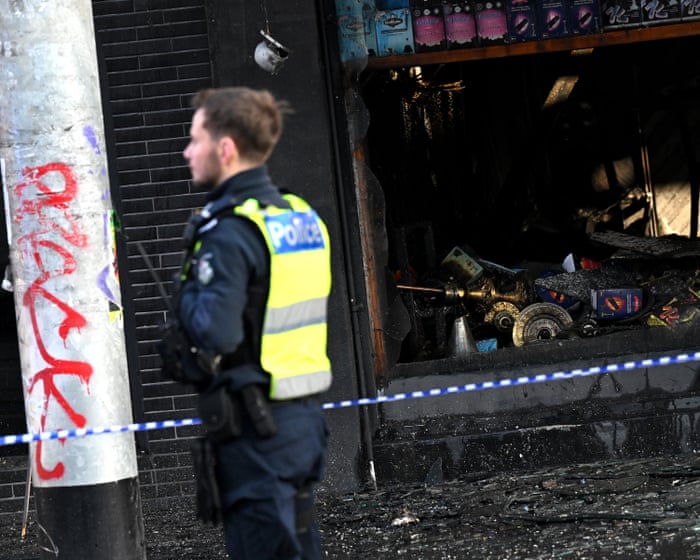
Following a series of sabotage acts, cyberattacks and drone incidents, European politicians increasingly link them to Russia and call for a tougher joint response. The European Commission is drafting a new security strategy, though proving Moscow's involvement remains difficult in practice.
On Thursday, the German flag and coat of arms were removed from Germany's Consulate General building in St. Petersburg, as the mission closes in response to Germany's recent closures of the Russian consulate in Bonn and the Russian House in Berlin. This followed Germany's decision to hold the Kremlin responsible for an August incident at Leipzig airport, where several explosive-laden drones were found near a Ukrainian cargo plane carrying ammunition. It was the first time Russia was officially accused, based on evidence, of sabotage on EU territory.
Similar incidents have occurred across Europe both before and after the Leipzig case. Polish Foreign Minister Radoslaw Sikorski listed arson attacks, an attempt to blow up a moving train, attacks on border crossings in Moldova and Romania, and drones crossing into Polish, Romanian and Lithuanian airspace.
European politicians are speaking of escalation in increasingly sharp terms. French MEP Nathalie Loiseau said sabotage, cyberattacks and election interference amount to waging war without declaring it. Lithuanian MEP Rasa Juknevičienė said Europe's slow decision-making is its main weakness, which the Kremlin exploits. German Chancellor Friedrich Merz said Russia is building up its military presence in the region and using it daily for hybrid activity, but stressed Europe would not be intimidated.
New security strategy
Hybrid attacks dominated this week's summit of European leaders in Finland. European Commission President Ursula von der Leyen, in her annual address to the European Parliament, called for strengthened resistance and the creation of a European Security Council, and announced a new European security strategy to be developed with the EU's High Representative for foreign affairs.
In practice, proving Russian involvement is often difficult — perpetrators are frequently recruited via social media through intermediaries and, even when detained, often do not know who commissioned them. Marek Kohv, a researcher at the International Centre for Defence Studies, suggested treating the problem like counterterrorism, focusing on logistics and financing rather than individual perpetrators. He also mentioned possible measures such as banning Russian military personnel from entering the Schengen area and reducing the number of diplomats at embassies, noting that Russia's hybrid activity tends to intensify when its position on the Ukrainian front worsens.