Ecologist: Russian strikes on ships and dam blast leave lasting scars on the Black Sea
Odesa hydrobiologist Vladyslav Balinskyi describes how Russian attacks on civilian vessels, fuel spills and the destruction of the Kakhovka dam will affect the Black Sea ecosystem and coastal soil for decades.
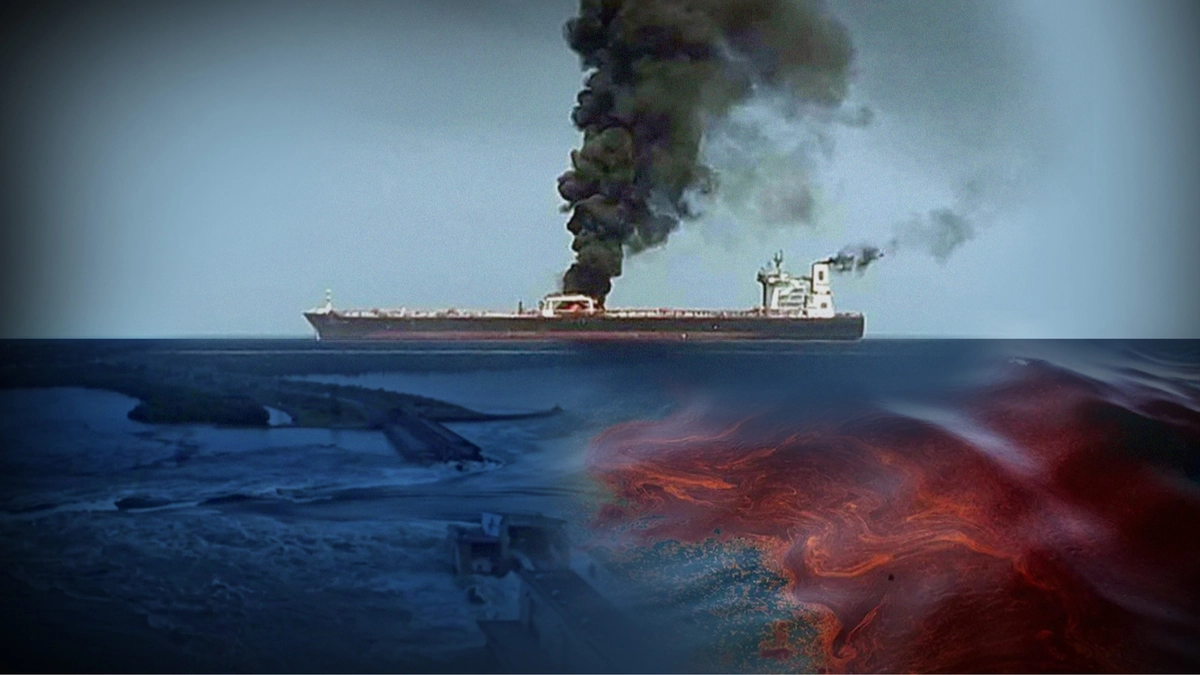
Odesa-based ecologist and hydrobiologist Vladyslav Balinskyi, who documents environmental damage caused by the war, has described how military operations are reshaping the Black Sea, its coastline and the soil along the front line — effects that may last for years or decades. He personally witnessed the July attack on the cargo ship "Golden Leo," hit by Russian cruise missiles near Odesa; ten people died, and the vessel later sank in Odesa Bay along with its cargo.
Balinskyi argues that Russian strikes on civilian cargo ships are often more environmentally damaging than Ukrainian strikes on tankers of Russia's so-called shadow fleet, since Ukrainian operations typically leave targeted vessels disabled but afloat, whereas repeated Russian strikes cause ships to sink and spill fuel.
Oil and fuel oil in the sea
Attacks on storage tanks and vessels have repeatedly released large volumes of vegetable oil into the sea — in December last year a slick of 60 square kilometers contaminated beaches. The expert notes that by some environmental indicators, oil can be even more harmful than fuel oil. Additional risk comes from Russia transporting oil products via small tankers through the Sea of Azov; a December 2024 accident involving two tankers still produces fuel oil slicks detected hundreds of kilometers away.
The Kakhovka disaster and vanishing dolphins
Balinskyi considers the 2023 destruction of the Kakhovka dam the most painful environmental consequence of the war, causing mass pollution and the death of freshwater species. While flooded areas are partly recovering naturally, the ecosystem can no longer be fully restored to its previous state. Since 2022, roughly 100,000 dolphins have died in the Black and Azov seas, affected by both chemical pollution and wartime sonar and explosions that disrupt the animals' navigation.
He says the least documented damage is to soil along the front line — phosphorus munitions destroy the fertile topsoil layer and the organisms living in it, altering the landscape so severely that without human intervention such areas risk turning into desert.

/nginx/o/2026/09/22/17930971t1h278a.png)