Experts: Nepal disaster triggered by huge glacier chunk falling into river from thousands of metres up
Scientists say the deadly floods in Nepal were caused by a massive glacier fragment that broke off from around 5,200 metres altitude and fell into a river. At least 353 people have died and 826 remain missing, including six Latvian citizens.
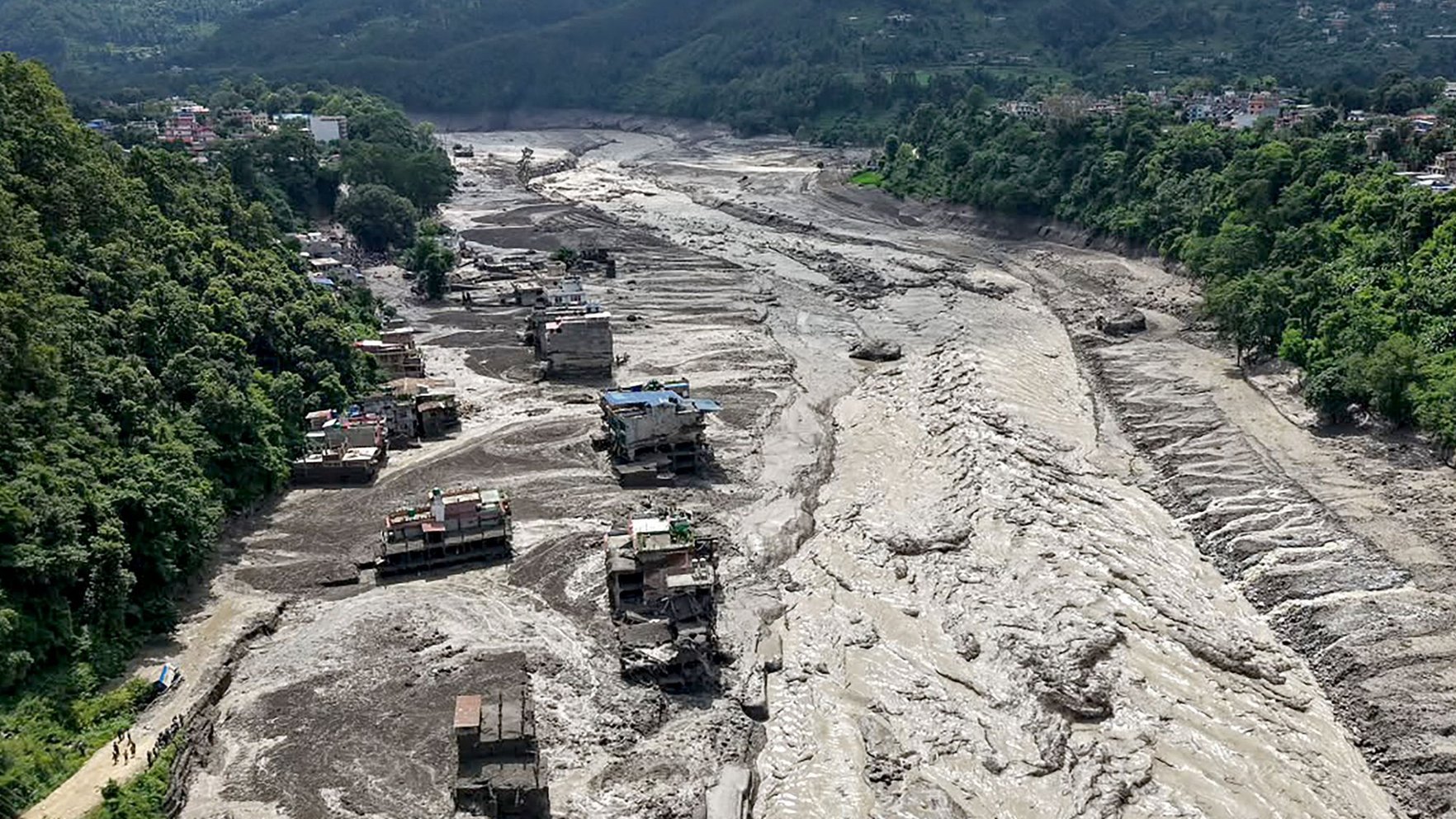
Analysing available data and satellite imagery, scientists have concluded that the devastating floods in Nepal and Tibet were caused by a large piece of glacier collapsing from an altitude of roughly 5,200 metres and falling into a river below. Simon Cox, chief scientist at New Zealand's GNS Science, explained that once the ice mass hit the river, a powerful mudflow surged down the canyon, sweeping up rocks, sediment, trees and everything else in its path.
Initially mistaken for an earthquake
The glacier collapse was large enough to register as a seismic event of magnitude 5.2, initially leading to the mistaken belief that an earthquake had occurred. The US Geological Survey later confirmed the seismic signal actually came from the glacier collapse and debris flow, not an earthquake. The exact volume of collapsed ice is still unknown, but Cox estimated it could range from half a million to tens of millions of cubic metres.
Flood surge destroyed villages
The wall of water and mud first struck a border post, as captured in unsettling surveillance footage showing people fleeing the mud and debris. It then moved downstream along the Bhote Koshi river in Nepal, flooding villages and destroying bridges and buildings. A monitoring station near the Tibetan border recorded a water level of 12.3 metres before it stopped transmitting data. Experts initially considered a glacial lake outburst flood, but no such lake was found near the collapse site — the water may instead have been pooled beneath the glacier itself.
Glacier melt and climate change
Scientists note that summer glacier melt upstream and monsoon rains had already raised river levels, with the situation worsened by debris and mud accumulated as the flow travelled kilometres from its source. While it is difficult to directly attribute a single event to climate change, experts point out that a warming planet is continuously destabilising glaciers worldwide, increasing risks for downstream communities.
Authorities reported on Thursday that at least 353 people have died in the disaster, while 826 people, including at least 579 tourists, remain unaccounted for. Six Latvian citizens are among those missing.