Analyst: Russia uses Ukraine talks to push European security architecture agenda
A Diena interview examines the latest US-Russia-Ukraine talks in the United Arab Emirates. It argues Russia is steering discussion toward a revision of European security, which could mean a reduced NATO presence in the Baltics.

A recent interview in the Latvian daily Diena examines the latest round of talks between the United States, Russia and Ukraine in the United Arab Emirates (UAE) on ending the war in Ukraine. The talks ended with neither peace nor a ceasefire, but they brought up the question of revising Europe's security architecture, which bears directly on Latvia's security.
Background
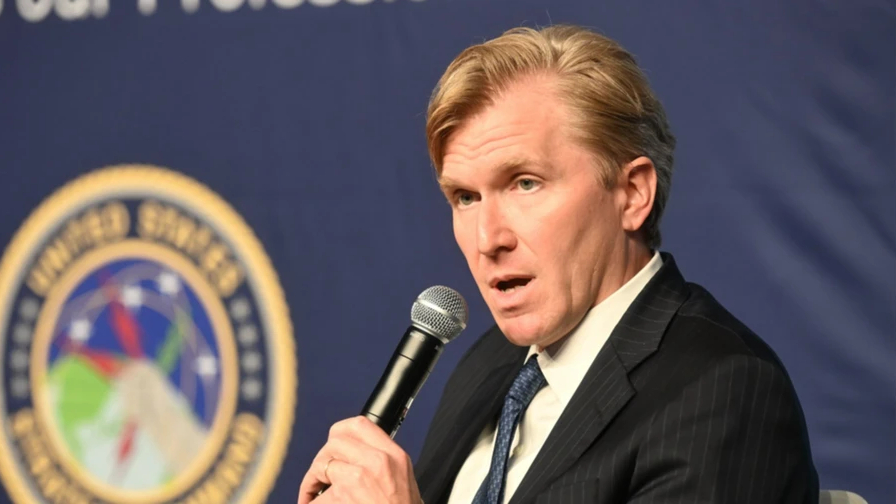
In October, Finnish President Alexander Stubb and Norwegian Prime Minister Jonas Gahr Støre held a phone call of about an hour and a half with Russian President Vladimir Putin. Ahead of the UAE talks, Jared Kushner, son-in-law of US President Donald Trump and one of his negotiators, linked ending the war to a broader agreement on a new European security architecture and an end to 30 years of mistrust between Europe and Russia. European representatives travelled to the UAE but were not admitted to the negotiating table. US General Alexus Grynkewich, NATO's Supreme Allied Commander Europe, was also present. Afterwards Kushner and Trump's other envoy, Steve Witkoff, went on to Moscow to meet Putin. Over the weekend an informal European Council meeting was held in Dublin, where Europeans also met Ukrainian President Volodymyr Zelensky.
Interpretations
The EU's High Representative for Foreign Affairs, Kaja Kallas, believes Russia is stalling by bringing up this topic. The interview suggests the security architecture issue also serves as an entry ticket for Europe to the talks, while at the same time creating conditions in which European participation becomes practically impossible. Europe struggles to agree on a representative; seven candidates are named: the European Commission, the European Council, Germany, France, Britain, Italy and Poland.
The interview notes that Kremlin demands could mean returning NATO's presence to its 1997 level, meaning a reduction in the Baltic states and on the alliance's eastern flank, as well as recognition of a Russian sphere of influence. It also assesses that the US is not ready to abandon Ukraine, since it continues to sell weapons to Europe that end up in Ukraine. The expert recalls that several previous US presidents tried to improve relations with Russia, and stresses that Europe must keep talking to the US in parallel.