Engadget Builds a 1970s-Style Slate Electric Truck Costing Nearly $38,000
Editors at US tech site Engadget configured a version of the modular Slate Truck electric pickup inspired by the 1970s Ford Bronco. The total comes to $37,918 and could still rise.
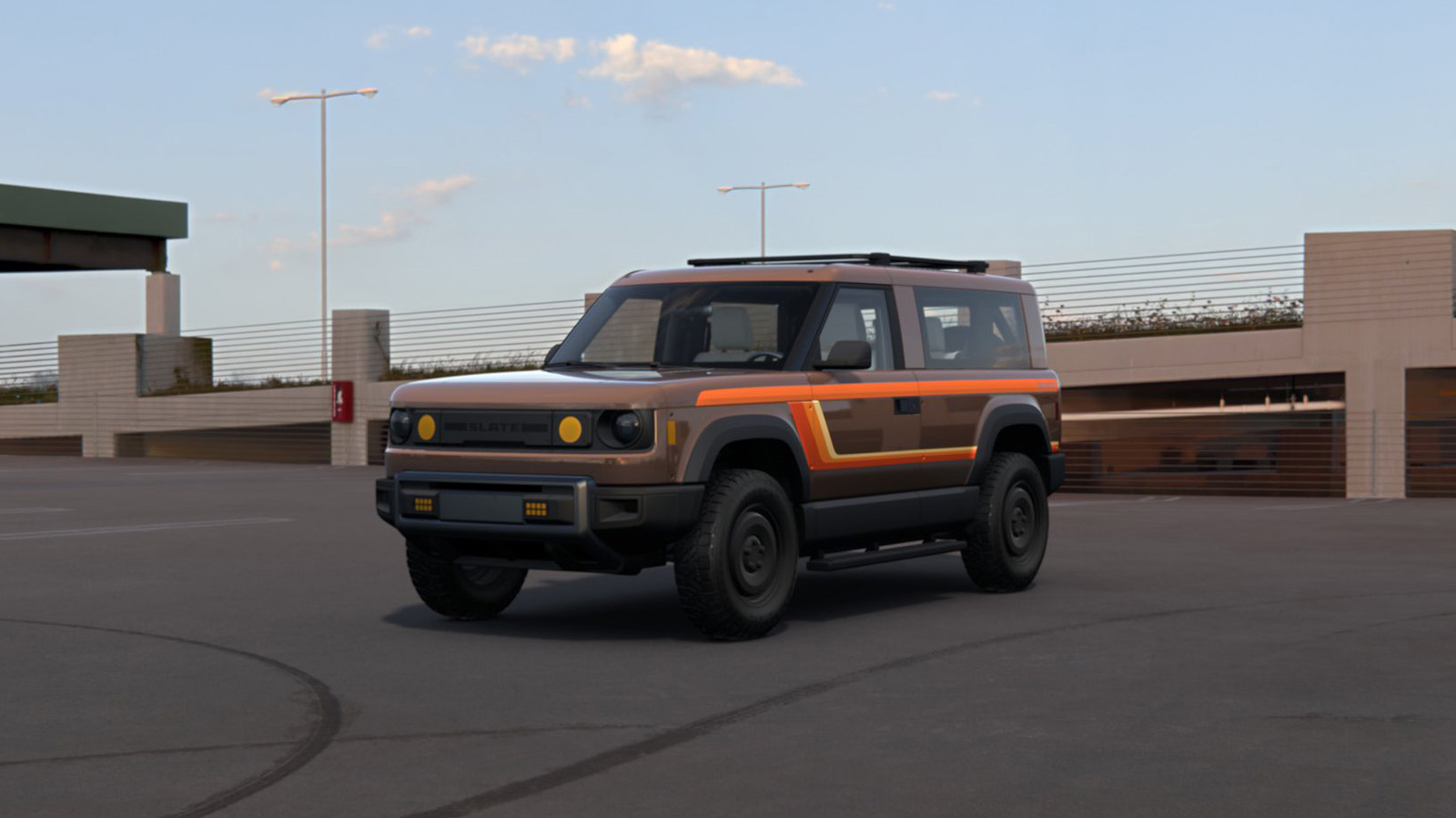
Editors at Engadget, a US technology website, used the manufacturer's online configurator to design their own version of the modular Slate Truck electric pickup, styled after 1970s Ford Bronco off-roaders. The Slate Truck leaves the factory as a bare-bones two-seat pickup in a single gray color, but buyers can customize it with more than 200 add-ons. That customization changes the price considerably: the base model costs $24,950, while Engadget's build approaches $40,000.
Foundation and looks
The editors chose a five-seat squareback SUV body with a roll cage, extra airbags and a three-person bench seat. It starts at $29,950 before accessories, which is $2,000 less than the sloped fastback version. The body got a Michigan Copper wrap ($670) plus retro decals along the sides. They also picked upgraded bumpers, fog lights, fender flares, a spare tire carrier, running boards and a roof rack. All-terrain tires on 17-inch wheels add $1,100.
Interior and technology
Inside, the build adds throwback decals, a center console, door cubby organizers and all-weather floor liners. Power windows could not be added: Slate removed them from its listings, though a spokesperson said they could return. The truck has no screen or stereo by default, as the idea is to use a phone for both. The editors chose speakers for $400 in total, Bluetooth steering wheel controls, a tablet mount and a $479 home charger that, according to Slate, fully charges the truck in five to eight hours.
The final bill
Accessories come to about $6,518 and the destination fee is $1,450, bringing the total to $37,918. That figure excludes the lift kit and other accessories that have no announced price, which could push the accessories tab to around $8,000. Slate estimates 205 miles (about 330 km) of range for the base pickup, and the heavier SUV will likely get less. The truck is rear-wheel drive, which makes it better suited to dirt roads than steep trails or deep mud.