New EU long-term budget plan cuts cohesion funding for the first time
European Council President António Costa has presented the third draft of the EU's seven-year budget in Brussels, trimming cohesion funds by €8 billion while leaving farmers' direct payments untouched. Latvia's €9.3 billion allocation is under pressure, though the text promises support for regions bordering Russia, Belarus or Ukraine.

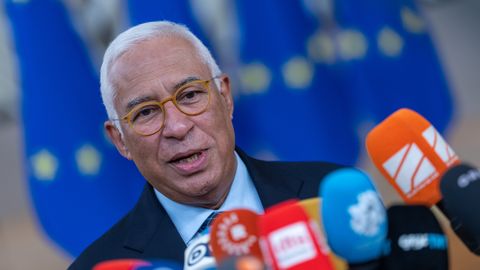
European Council President António Costa has presented the third version of the European Union's multi-year budget plan for the coming seven-year period in Brussels. For the first time in the negotiations, cohesion policy, the EU's regional support funding, takes a cut: it is €8 billion lower than in the previous proposal. Farmers' direct payments have not been touched. Costa took over leadership of the talks from the Irish presidency.
The reduction is a blow to a bloc of Eastern and Southern European countries known as the friends of cohesion, which only days ago categorically opposed cutting this funding. German Chancellor Friedrich Merz, for his part, had demanded a smaller EU budget.
Overall spending and revenue
Compared with the European Commission's first draft, spending has been reduced by 10%, or €200 billion. According to Costa, member states' contributions would rise on average from 0.80% to 0.82% of their gross national income.
New own resources offset part of the spending and would bring in about €60 billion a year. The plan contains five sources:
- a 3% levy on large digital companies such as Google and Meta (Brussels previously shied away from this over fear of Washington's reaction);
- a higher tax on uncollected electronic waste and on tobacco;
- all revenue from the carbon border adjustment mechanism, rather than only 75%;
- revenue from national spectrum auctions;
- a gradually larger EU share of the emissions trading system.
Levies on crypto companies are also to be assessed.
Impact on Latvia
Under the Commission's first proposal, Latvia's funding envelope is €9.3 billion, nominally the same as in the current period. It is now under pressure because overall cohesion funding has been reduced. At the same time, point 4 of the plan says the budget will offer support to all regions on the EU's external border, including those bordering Russia, Belarus or Ukraine. This is the wording that Latvia and other eastern-flank countries had requested. What it will mean in monetary terms is not yet clear.
Next week, EU leaders will meet in Brussels to discuss the figures. Disputes are expected, and a final agreement is anticipated in December or early next year.