EU Leaders Agree Who Will Represent Europe in Future Ukraine Peace Talks
At a European Political Community summit in Dublin, EU leaders agreed that Europe will be represented in future peace talks by national security officials from Germany, France, the U.K., Italy and Poland, plus the European Commission and Council. The meeting, meant to focus on artificial intelligence, was dominated by Ukraine.

EU leaders meeting in Dublin on Friday, Nov. 13, agreed on how Europe will be represented in future peace negotiations over the war in Ukraine. Talks will involve national security officials from Germany, France, the U.K., Italy and Poland, known as the E5 group, together with representatives of the European Commission and the European Council. The question matters because a meeting between U.S. President Donald Trump and Russian President Vladimir Putin is due next week, and European capitals fear that decisions on the continent's security could be made without them.
The gathering was hosted by Ireland, which currently holds the EU's rotating presidency. It had been billed as a discussion on developing artificial intelligence in line with European values, but most of the time went to Ukraine. Leaders disagreed on whether Europe should be represented by one person or several, and who that person should be. Italian Prime Minister Giorgia Meloni requested that the issue be added to the agenda at the last minute.
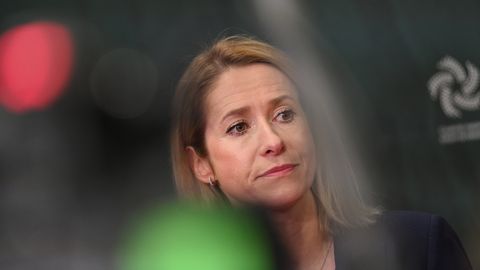
European Council President António Costa said after the summit that a team speaking with one voice was essential, noting that Trump has also assigned two envoys, Steve Witkoff and Jared Kushner, to negotiations. German Chancellor Friedrich Merz had earlier favored a narrower group of officials from Berlin, Paris and London, while EU foreign policy chief Kaja Kallas argued she was best placed to lead.
Fears of a U.S.-Russia deal
Trump and Putin are scheduled to meet on Nov. 18–19 during an APEC summit in Shenzhen, China. The meeting has prompted warnings about a possible Yalta-type arrangement, in which major powers would settle European security questions over the heads of the countries concerned. Merz had a message for Washington: "Please, no surprises!"
As leaders gathered, Putin said he was open to Europeans joining the talks, reversing Moscow's earlier opposition. Kremlin spokesperson Dmitry Peskov then said Europeans must first show genuine intention and readiness to contribute to the peace process. Kallas dismissed that condition as a "trap." Other officials said Russia's preconditions would amount to concessions to Moscow's demands: NATO withdrawing from European states bordering Russia, lifting sanctions and banning foreign troops in Ukraine.
The AI discussion
Over lunch, leaders discussed making AI more "sovereign," meaning less reliant on U.S. and Chinese technology providers. French President Emmanuel Macron announced that France and the Netherlands will host a "Tech Creators" meeting on Dec. 2. Mistral CEO Arthur Mensch urged leaders to redirect some €260 billion now spent on foreign technology toward home-grown infrastructure, research and development.