Everdrone's Defibrillator Drone Shows Up on Air Ambulance Helicopter Display in Stockholm Test
A defibrillator drone from Swedish company Everdrone appeared on the navigation display of an Avincis medical helicopter in a Stockholm test on September 11. The companies announced the result on November 26.
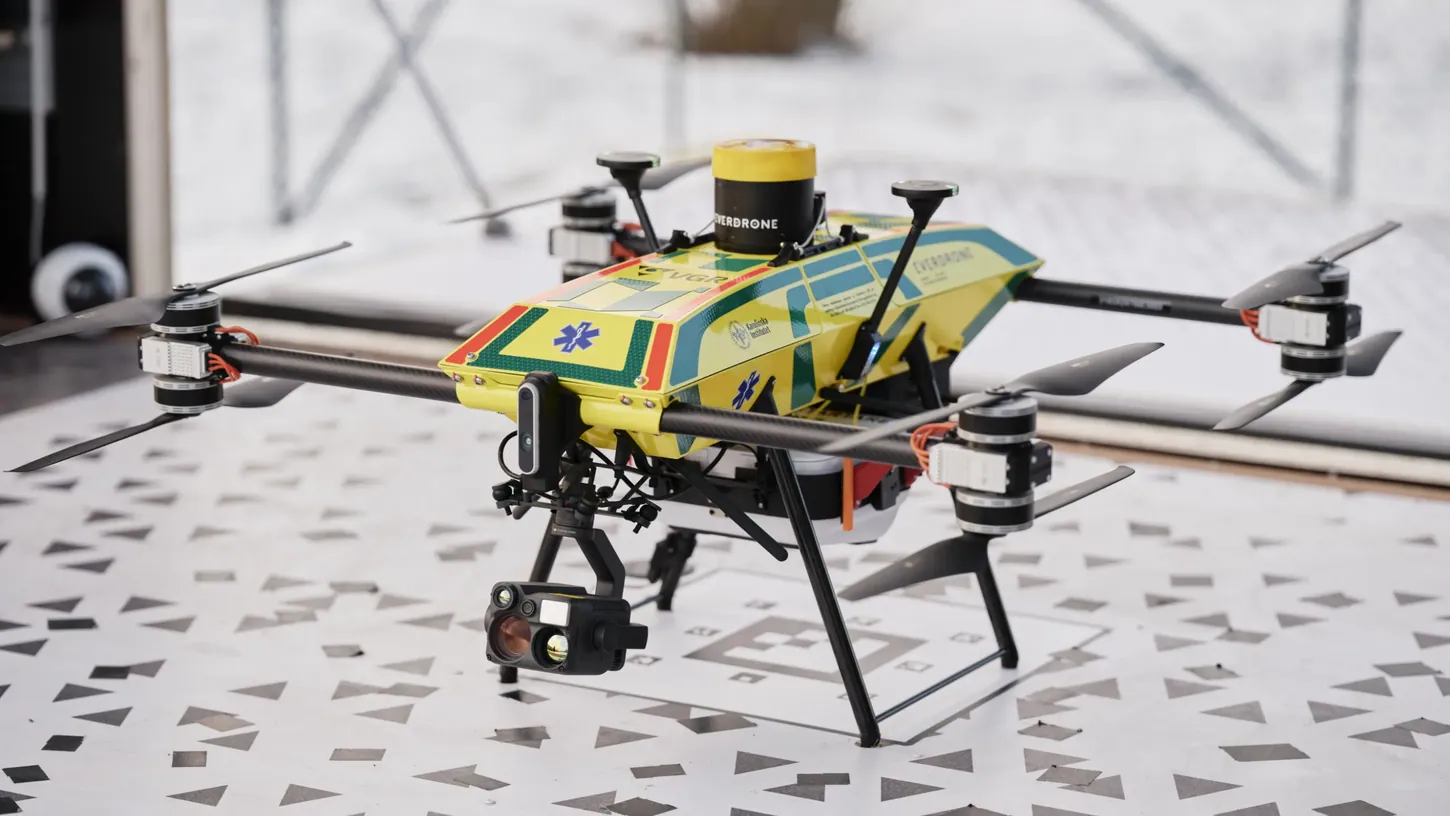
A defibrillator-carrying E3 drone made by Swedish company Everdrone appeared on the navigation display of an air ambulance helicopter during a test in Stockholm on September 11. Everdrone and Avincis, which operates medical helicopters for Swedish regions and hospitals, announced the result on November 26. The test matters because drones and crewed aircraft are increasingly set to share the same low airspace.
The E3 broadcast its position over FLARM, a collision-warning system originally developed for glider pilots. A new feature in the helicopter picked up the signal and showed the drone on a screen the pilot already uses on routine flights. Previously, crewed aircraft could see Everdrone's drones only through separate digital tools.
The helicopter used was an Airbus H145. Avincis added two new H145s to its Stockholm fleet in June 2025. Rickard Gillberg, Avincis head of flight operations, said that if the helicopter is not safe, "we cannot help the patients who need us." Everdrone CEO Mats Sällström said drones should not be developed as a separate system alongside crewed aviation.
The announcement does not say how close the drone and helicopter came, how many flights the test covered, or whether the feature is now active across the Avincis fleet. Everdrone signed an agreement with Region Stockholm's ambulance service in February to fly defibrillator drones, placing them in the same low airspace used by the region's air ambulances. In July, the company's drone reached a cardiac arrest in Borås before an ambulance.
A similar issue in the US
The United States is debating a related problem over the Federal Aviation Administration's (FAA) proposed Part 108 rule on beyond-visual-line-of-sight drone flights. It would require crewed aircraft that do not broadcast their position via ADS-B Out or an approved device to yield to drones in parts of low-altitude airspace. That provision drew more than half of roughly 3,100 comments, and the FAA reopened the docket in January. The final rule has been under White House review since July 10.