Florida Surgeon Performs First Telerobotic Operation Between Two US Hospitals
A Florida surgeon removed the prostate of a 66-year-old cancer patient from 35 miles away. According to the AdventHealth hospital network, it is the first documented telesurgery between two US locations.
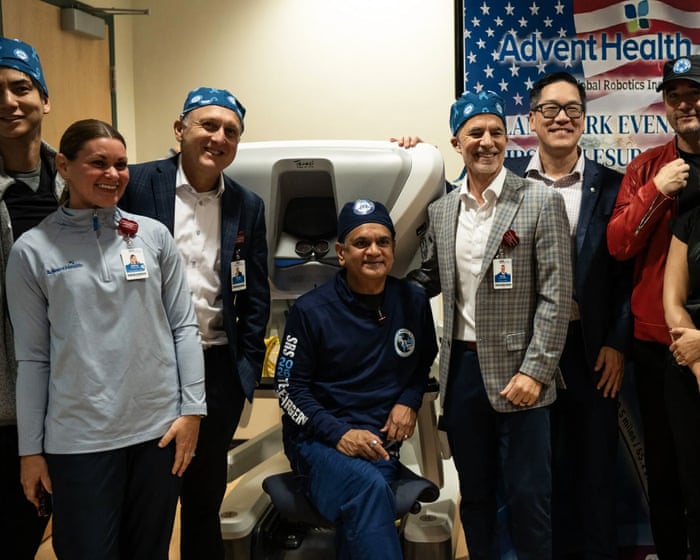
A Florida surgeon on Sunday carried out the first telerobotic operation between two US hospitals, removing a cancer patient's prostate from about 35 miles away. Dr Vipul Patel, founder and medical director of the Global Robotics Institute at AdventHealth Celebration in suburban Orlando, performed the procedure as part of a clinical study evaluating a robotic telesurgery system.
How the operation unfolded
The patient, identified only as Mark, is 66 and has prostate cancer. He volunteered for the study. Mark was at an AdventHealth facility in Minneola, Florida, while Patel operated remotely from another AdventHealth facility in the community of Celebration. Marcio Moschovas, a surgeon and the study's co-principal investigator, supported Mark on site during the procedure. AdventHealth told the broadcaster ABC that Mark was recovering well.
The operation was conducted under an investigational device exemption approved by the US Food and Drug Administration (FDA). Such an authorization allows a system to be studied, but it is not FDA approval or clearance for use.
Earlier steps and open questions
The operation followed 10 investigational telesurgeries between Orlando, Florida, and Luanda, Angola, and marks the study's expansion into US hospitals. A statement attributed to Patel said the study lets doctors assess whether telesurgery could one day help reduce geographic barriers to specialized treatment.
Telesurgery lets surgeons control robotic instruments remotely, but researchers are still evaluating its safety, reliability and cybersecurity. AdventHealth said no earlier reports have documented a telesurgery procedure between two US locations, and cautioned that Sunday's operation does not establish the technology's general clinical performance.
Robotic prostatectomy carries risks including bleeding, infection, incontinence and erectile dysfunction, as well as the possibility of switching to open surgery. Telesurgery adds risks such as equipment or connection failures and cybersecurity threats, so an on-site team must be ready to take over if needed.
A similar operation took place just months earlier, when a surgeon in London used a four-armed robot with a 3D camera to remove a man's prostate in Gibraltar, about 1,500 miles away. That surgery was successful, with a lag of only 0.06 seconds between the surgeon's movements and the robot's response.