Von der Leyen urges stronger EU borders after Ceuta crisis
European Commission president Ursula von der Leyen has called for reinforced EU external borders, including physical barriers, after the mass arrival of migrants in the Spanish enclave of Ceuta, while praising Spain's response and urging lessons to be learned.
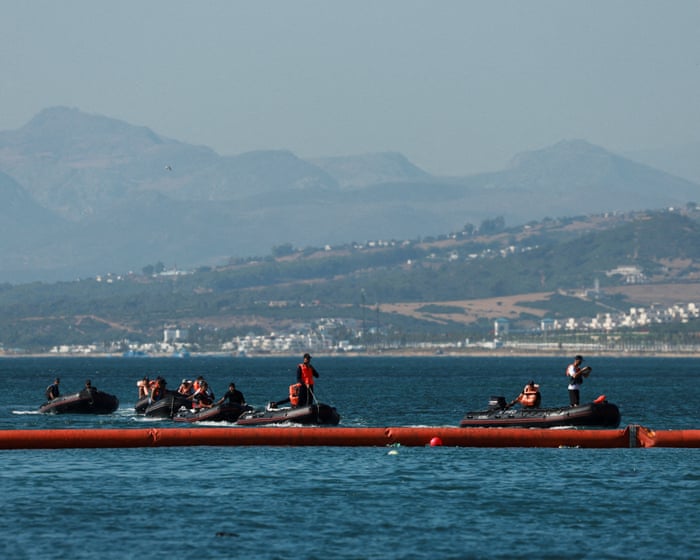
In a letter to Spain's prime minister, Pedro Sánchez, von der Leyen said the Ceuta incident had made clear that more needed to be done to strengthen borders at critical points, including through vigilant monitoring and the use of physical barriers where necessary. She praised Sánchez's swift handling of the situation, saying order had been restored and the returns system had worked. Spanish authorities have begun installing a 500-metre floating barrier at the border with Morocco.
Spain estimates that about 69,500 migrants have been returned to Morocco over the past four days, exceeding the initial figure of around 50,000 who had arrived on Thursday. Ceuta's authorities reported 88 deaths among those trying to reach the territory, while at least 11 deaths were recorded in Morocco. Ceuta and Melilla, Spain's other enclave, are the EU's only land borders with Africa, and both lie outside the Schengen free-movement zone, with periodic surges in crossing attempts.
EU interior ministers are due to hold emergency talks on Tuesday, which von der Leyen said would be a chance to draw lessons from the crisis. She said the EU should focus on five areas: strengthening cooperation with non-EU countries, reinforcing external borders, implementing early-warning systems, dismantling smuggling networks, and increasing returns of people without the right to stay.
The political fallout saw Italy and Denmark call for Spain's temporary exclusion from Schengen, prompting Sánchez to accuse them of being driven by prejudice, fake news, ignorance or political interest. Italy and Denmark also organized a letter, signed by 20 other member states, blaming the crisis on Sánchez's decision to regularise the status of 500,000 undocumented migrants. The 22 leaders argued for a duty to deter illegal migration and address pull factors, although academic research has found, at most, a weak link between regularisation programmes and migrant arrivals. Michele LeVoy, director of the migrants' rights network Picum, said regularisation may be seen by other states as inviting secondary movement, which helps explain the harsh response.
Italian media reported that Giorgia Meloni's government wanted to accelerate the opening of offshore migration centres, which Europe's top human rights expert recently warned could become "human rights black holes". In June, the EU allowed offshore detention centres as part of a law aimed at raising deportations.
Von der Leyen stressed that Spain could access EU funds and support from Frontex, though Madrid has not yet asked for the agency's help. She called Morocco an important strategic partner, especially in combating illegal migration, and suggested enhancing border-management early-warning systems and technical and financial support. Rights groups countered that people seeking work or fleeing persecution needed safe routes, with LeVoy arguing that the real cause of the Ceuta events is Europe's inaction on work permits, regular pathways, and the dismantling of asylum systems.