France: Over 600 arrested as high school protests turn violent
French security forces detained more than 600 people on Wednesday as protests outside high schools escalated into violent clashes, injuring dozens of police and teachers. The movement, which began near Paris, has now spread to cities across the country.
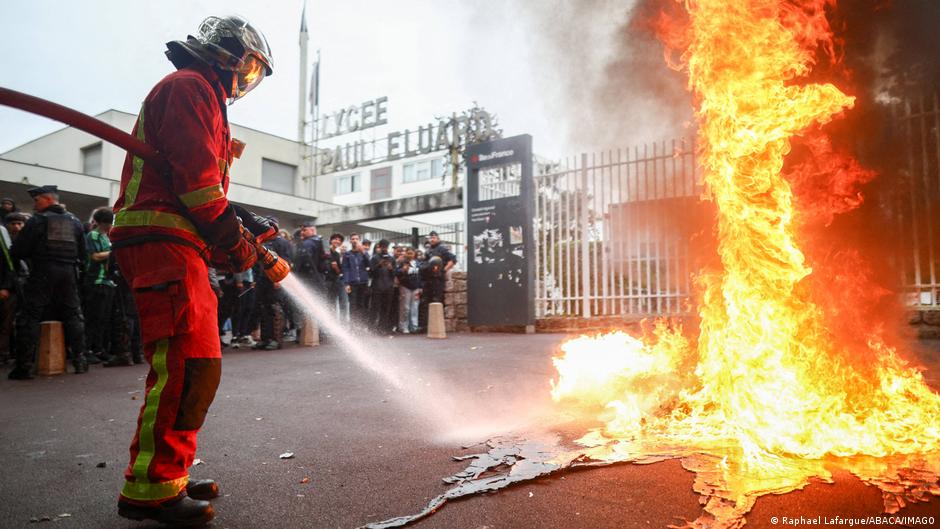
French authorities arrested more than 600 people on Wednesday as protests outside high schools in several regions turned violent. Interior Minister Laurent Nunez said 83 police officers and gendarmes were injured in clashes and arson attempts, along with 32 teachers and students. He said the unrest affected 356 schools nationwide.
Nunez condemned attacks on law enforcement, the throwing of projectiles, verbal abuse and attempted arson, describing the events as amounting to urban violence.
Why students are protesting
French high school students have been blockading their schools since last week, protesting overcrowded classrooms, heavy workloads, poor-quality learning materials and teacher shortages. One 17-year-old student told Reuters her school was infested with cockroaches and rats, and that classroom temperatures swung between sweltering heat and freezing cold depending on the weather.
The movement began in the Ile-de-France region around Paris but has since spread to other parts of the country. Among the cities worst hit on Wednesday were Paris, Bordeaux, Lyon and Lille, where police again deployed tear gas during clashes.
Government response
Speaking in Madrid, President Emmanuel Macron acknowledged the students' grievances as legitimate but said they could not justify violence against police and teachers. He said schools were meant for open learning, not for blockades or burning trash cans.
Both Macron and Nunez accused far-left groups of inciting the violence, saying some individuals had moved between schools to stir up students. In recent days, officials have criticized the left-wing La France Insoumise party and its leader Jean-Luc Melenchon, who accused the government of a crackdown with racist undertones. Prime Minister Sebastien Lecornu rejected the accusation as insulting, saying Melenchon was injecting race into a debate about student safety.
/nginx/o/2026/09/24/17936130t1ha7ff.jpg)