Student protests in France grow into wider unrest ahead of presidential election
A protest by French school students over poor learning conditions has grown into mass demonstrations drawing more than half a million people. Police detained nearly 2,500 people as politicians argue over violence and the government's responsibility.
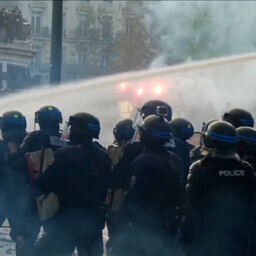
Mass demonstrations took place in France last Saturday after school students protested against poor learning conditions, with more than 500,000 people taking part according to official estimates. The action has grown into a broader social and political dispute roughly six months before France's presidential election, scheduled for April next year.
How it began
At the end of September, lycée pupils, meaning upper-secondary students, began protesting. One pupil, Fadila, said classrooms have no windows, toilets in temporary modular buildings have no water, and cockroaches and rats roam the school. Journalist Mikhail Salenkov, who lives in Lyon, pointed to a shortage of teachers: three or four lessons are cancelled every week and are not replaced.
When pupils began blocking their own schools, Education Minister Édouard Geffray urged calm, while Interior Minister Laurent Nuñez warned that police would intervene if protesters threatened teachers or students. On Saturday, university students and trade unions joined the protest.
Unrest and detentions
Looting broke out in Paris and other cities, and police used force actively against not only looters but also peaceful demonstrators, according to photographer Anton Karliner. Almost 2,500 people were detained over the weekend, and court proceedings began this week. Lawyer Tristan Loulless argued that some detentions are made to intimidate protesters.
President Emmanuel Macron distinguished those voicing legitimate demands from vandals, but later claimed that far-left groups aim to overthrow the Republic. He demanded that all political forces condemn violence and said actions not organised by trade unions would be banned where possible.
Political struggle
Jean-Luc Mélenchon, leader of the La France Insoumise party, considers the demand to condemn violence a trap and stressed that his focus is the demands made of the government. Marine Le Pen, head of the far-right National Rally, said millions of French people are angry but are not smashing or looting anything. She also called for an end to funding for Ukraine.
The state budget deficit exceeds 5% of GDP, and public debt has reached 119% of GDP. The protesters intend to continue their actions.

