Global investors urge Europe to ease regulation to attract capital
At the FII Institute summit in Rome, global investors stressed that Europe must accelerate reforms and cut red tape to compete with the US and Asia for investment.
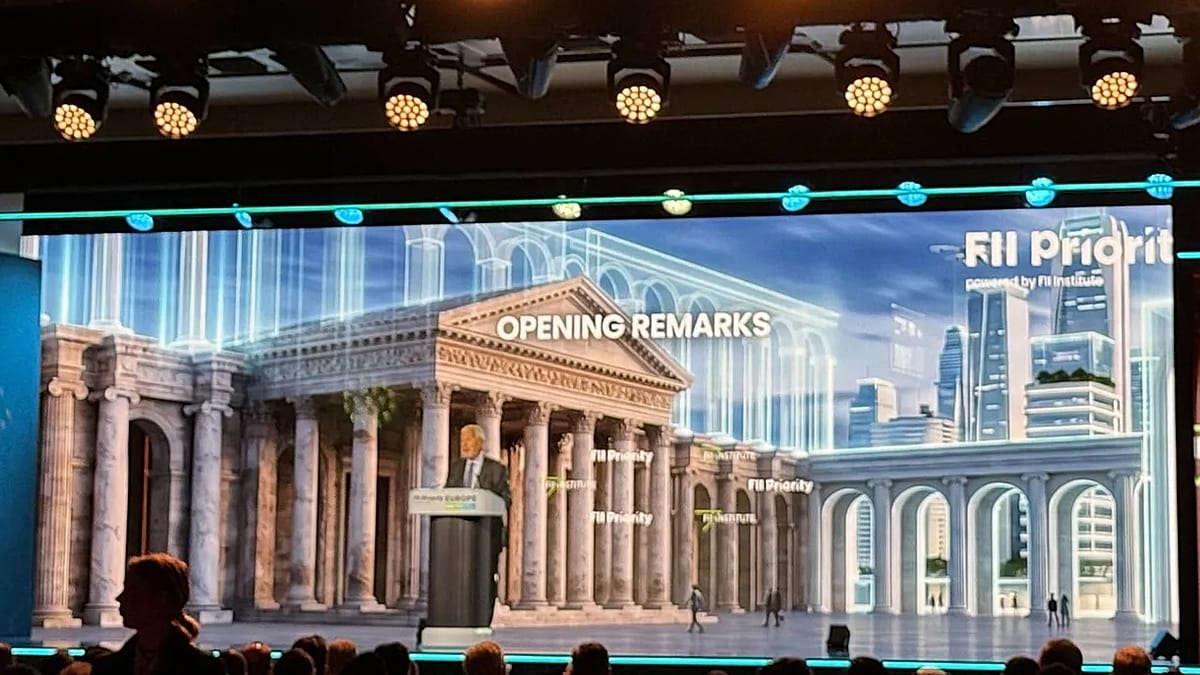
The FII Institute (Future Investment Initiative Institute) summit in Rome, which brought together politicians, business leaders and investors from around the world, delivered a clear message to European policymakers: the continent has a unique opportunity to attract investment, but it must cut bureaucratic red tape and speed up reforms.
Richard Attias, chairman of the executive committee of the FII Institute, said Europe has the talent, innovation and industrial capacity to lead the next phase of global growth, but it needs to create a more investment-friendly environment. "Europe remains one of the most attractive markets in the world, but investors are looking for clarity, predictability and speed in decision-making," Attias said in his speech. He argued for greater regulatory flexibility and simplification of administrative procedures to make it easier for capital to flow into strategic sectors such as artificial intelligence, digital infrastructure, clean energy and advanced manufacturing.
Attias warned that in an environment of intensifying competition for global investment, Europe is competing not only with the United States but also with emerging economies that are fast-tracking reforms to attract companies and major industrial projects. In his view, the challenge is not to abandon European standards, but to strike a balance between regulation, innovation and growth. "The world is moving at high speed, and so is capital. Europe has an extraordinary opportunity to lead the next economic transformation, but it must ensure that the conditions for investing are as competitive as in other regions," he stressed.
The same message was echoed by Yasir O. Al Rumayyan, head of Saudi Arabia's Public Investment Fund (PIF) and chairman of Aramco. He noted that Europe is at a decisive moment in defining its place in the new global economy and stressed the importance of creating the right conditions for long-term investment. "Europe has enormous opportunities in areas such as the energy transition, technological innovation and strategic infrastructure," Al Rumayyan said. His words carry particular weight in international markets: the PIF manages assets worth around $1.15 trillion, and Aramco, the world's largest oil company, posted profits of $93.5 billion last year.
The choice of Rome as the venue is no coincidence: for the organisers, the Italian capital symbolises Europe's ability to combine its historical legacy with a reform agenda focused on the future. The continent still holds great appeal for global capital, but it will have to speed up reforms and adapt its regulatory framework if it is to turn that potential advantage into sustained economic growth.


