This shark can live 400 years — and its eyes barely seem to age
New research suggests Greenland sharks, which can live for centuries, retain remarkably healthy retinas, likely thanks to a DNA repair mechanism. The findings could offer clues for treating age-related vision loss in humans.
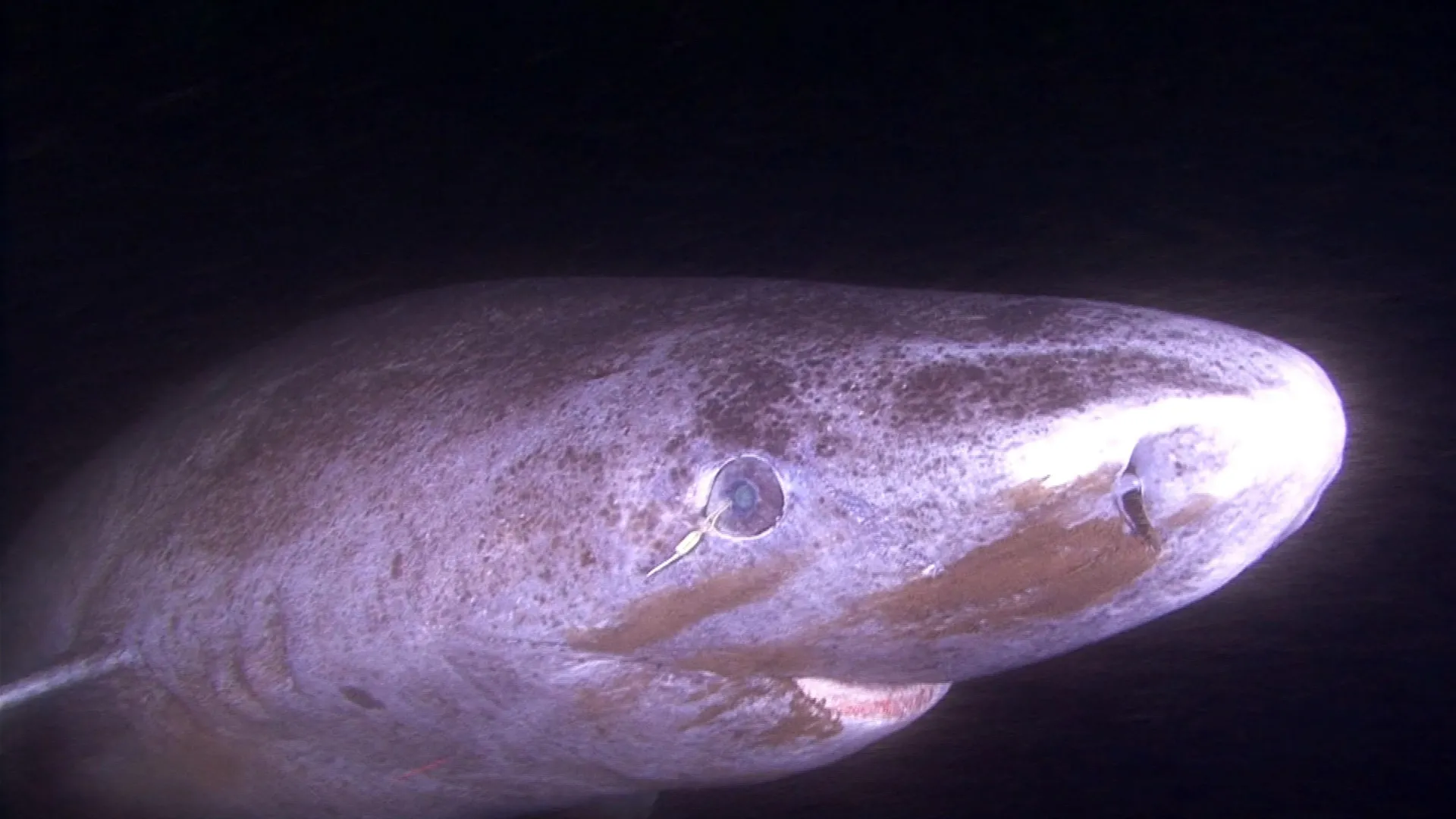
Greenland sharks are the longest-living vertebrates known to science, with some individuals surviving as long as 400 years. Their thick gray bodies, small heads and cloudy-looking eyes — often with parasites attached directly to the eyeball — long led scientists to suspect the animals might be functionally blind.
Dorota Skowronska-Krawczyk, an associate professor of physiology and biophysics at the University of California, Irvine, working with colleagues from the University of Basel in Switzerland, has now reached a different conclusion. Her interest began after reading a 2016 study in the journal Science describing parasites on the sharks' eyes. While watching video footage, she noticed the sharks moving their eyes toward light sources, suggesting the organ was still in use.
Examining centuries-old eyes
The study, published in Nature Communications, examined eyes from Greenland sharks caught between 2020 and 2024 near the University of Copenhagen's Arctic Station on Disko Island, Greenland, using scientific long lines. UC Irvine Ph.D. student Emily Tom conducted the analysis, adapting lab techniques normally used on mouse eyes — roughly the size of a papaya seed — to a shark eyeball about the size of a baseball.
Histological and vision-specific tests found no evidence of retinal cell death. The researchers also found that rhodopsin, a protein essential for vision in dim light, remained active in the retina and was tuned to detect blue light — an adaptation suited to the faint light of the deep Arctic waters where the sharks live.
Implications for aging research
The findings suggest a DNA repair mechanism may allow Greenland sharks to preserve their eyesight for centuries without the severe retinal deterioration that might be expected in such long-lived animals. Skowronska-Krawczyk says understanding this mechanism could eventually inform strategies for preventing age-related vision loss, including conditions such as macular degeneration and glaucoma. She noted uncertainty around federal research funding but expressed confidence the research will continue.