Georgia at a crossroads: protests, tourist boom and Russia's shadow
Two years after disputed parliamentary elections, weekly protests against the ruling Georgian Dream party continue in Georgia, even as the country draws record numbers of tourists. Its economy remains closely tied to Russia.
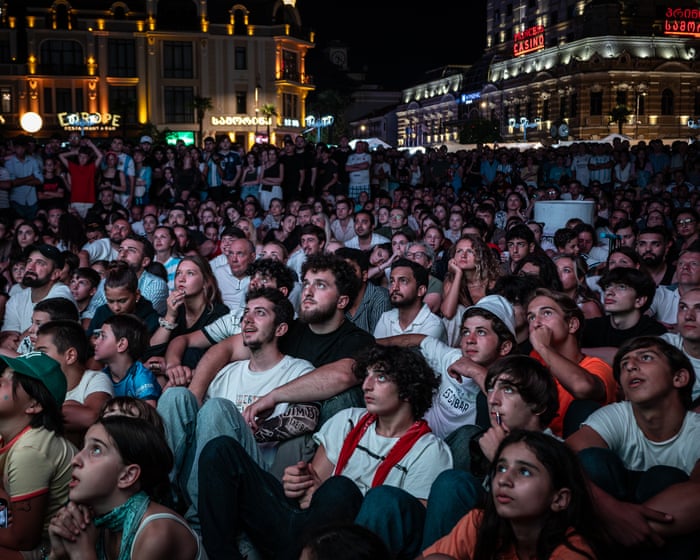
Georgia, a South Caucasus country between Russia and Turkey, marked two years on 26 October since disputed parliamentary elections that triggered a political crisis. In the capital Tbilisi, the "Saturday March" takes place every week: pro-European parties and movements walk from Avlabari Square to parliament to protest against the policies of the ruling Georgian Dream party. Critics accuse the party of growing authoritarianism and of steering the country towards Moscow.
The political crisis
Georgian Dream, an ultraconservative party, has been in power since 2012. Georgia received EU candidate status in 2023, but the government, led by Prime Minister Irakli Kobakhidze, suspended accession talks. Protests began two days after the 26 October 2024 election and peaked on 28 November, when the government said it would not put the opening of EU negotiations on its agenda before the end of 2028. The party was founded by billionaire Bidzina Ivanishvili, who served as prime minister in 2012–2013 and made his fortune in Russia in the 1990s.
Tourism and the economy
The political tension has not slowed tourism. According to the Georgian National Tourism Administration, the country recorded more than 5.5 million international tourist visits in 2025, up 8.4% on 2024 and almost ten times the roughly 560,000 of 20 years ago. Visitors come from Europe, the Middle East and Russia.
After the full-scale invasion of Ukraine in 2022, tens of thousands of Russian citizens moved to Georgia. They opened businesses, but by buying homes they also put pressure on the property market, which fuelled discontent. Georgians still regard Russia as an occupying power, given the 1990s wars against Russian-backed separatists in South Ossetia and Abkhazia and the August 2008 war.
Diplomatic relations with Russia were severed after the 2008 conflict, and Russia controls regions making up about 20% of Georgian territory. Yet trade, tourism, remittances, Russian capital and energy imports prop up the Georgian economy. GDP grew 7.5% in 2025, a fifth consecutive year of expansion, but unemployment, low wages, widespread poverty and rural depopulation persist.
Europe and Ukraine
Relations with Brussels have deteriorated recently, with the EU criticising the government's record on the rule of law and political repression. Many believe a stronger Moscow in the war in Ukraine would significantly increase its ability to pressure the Caucasus. This raises the question of whether Georgia's future also depends on the fate of Ukraine.


