Guardian column: US moves against Ukraine should push Europe to rethink its defence
Guardian columnist Jonathan Freedland argues that US President Donald Trump's recent steps in the Russia–Ukraine war help Moscow and weaken Kyiv. He urges Britain and the rest of Europe to build up their defences independently of the US.
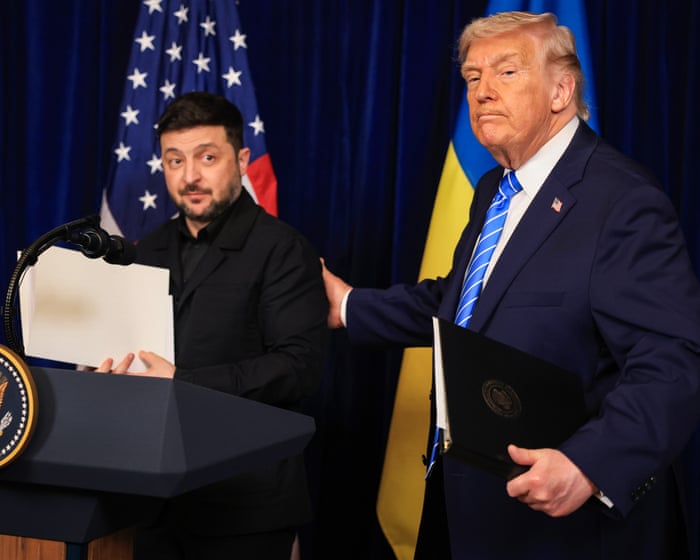
In an opinion column published on 16 October, Guardian columnist Jonathan Freedland argues that recent decisions by US President Donald Trump in Russia's war against Ukraine work in Moscow's favour. He says the West, including Britain, still cannot or will not fully accept this. The piece is commentary rather than straight reporting, so the points below are the author's conclusions.
The steps the author cites
Freedland writes that Ukrainian forces found this week that Starshield, the military-grade version of Starlink used to guide drones, no longer works at speeds above 100mph. The system is owned and controlled by the US government, and according to Reuters the order to limit its use in Ukraine came from the White House. The restriction reduces Ukraine's ability to strike behind the front line and also hampers air defences against Russian jet-powered drones. Ukrainian President Volodymyr Zelenskyy told Piers Morgan the decision would cost many lives.
The author also points to two nights of Russian bombardment without the usual US warnings, although Trump denies cutting intelligence sharing. He further cites Trump's agreement to buy $4bn of Russian diesel and the invitation to Vladimir Putin to attend December's G20 meeting at a Trump golf club in Florida.
A call to Europe
Freedland notes that the head of MI5 called Russia "aggressor number one" this week. He cites a study counting 151 confirmed Russian-directed industrial sabotage incidents in Europe between February 2022 and February 2026. He argues that even after the US midterm elections, due in a little over a fortnight, Europe should not expect a return to the old transatlantic relationship. In his view, the Starlink episode shows the US keeps an off switch for technology others rely on.
He urges UK Chancellor John Healey to make the case for higher defence spending in his first budget on 28 October. In the author's view, Labour's 2024 manifesto can no longer be treated as untouchable, and Britain must spend whatever it takes to protect itself.