Gulbe: State Savings Should Start With Excess Administrative Spending
Ingūna Gulbe, head of the Agricultural Market Promotion Centre, criticised on TV24 the practice of cutting state spending in areas that are already short of funds. She argued that unnecessary administrative costs should be examined first.
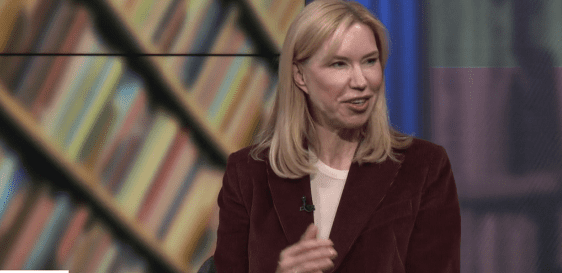
Ingūna Gulbe, head of the Agricultural Market Promotion Centre in Latvia, criticised the usual approach to cutting state spending during an appearance on the TV24 programme “Preses klubs”. In her view, when the state looks for ways to reduce expenses, attention most often turns to areas that already lack funding, rather than to excess administrative bureaucracy. The issue matters because such cuts can affect services people rely on every day.
Where to save, according to Gulbe
Gulbe said public administration contains a number of unnecessary administrative expenses that could be reduced without touching services important to society. As an example she named public transport, which people need to get to school and work, and which children need to reach after-school activities and other places.
“Whenever something has to be saved, we try to point a finger – you have to cut, you have to understand that saving is necessary. And the cuts happen where there is already very little,” Gulbe said.
She stressed that discussions about saving often go no further than loud statements. According to her, the state administration has many administrative matters and requests for paperwork that could be dropped, so savings can be found without touching “very painful things”.
Resistance from officials and lawyers
Gulbe sees one reason such spending is not reviewed in the resistance of the civil service and lawyers to change. In her view, instead of looking for ways to simplify a function or carry it out differently, arguments are first sought for why it cannot be done.
“Where there are lawyers, they always know how to say why something cannot be done, instead of looking for a solution for how it can be,” she said.
Gulbe believes the state administration has developed an overly strong bureaucracy that can justify the need for almost any service, making it harder to give up superfluous functions and spending. She also urged attention to publicly reported information about state expenses whose usefulness raises questions, suggesting that this is where to begin.
At the same time, Gulbe stressed that, in the name of saving, services that people truly need in daily life must not be forgotten. Public transport availability is one such issue.