Guinea-Bissau holds referendum on rewriting constitution to boost presidential powers
Guinea-Bissau is voting on a new constitution that would strengthen the president and reduce parliament's role, with the opposition calling for a boycott after the military-drafted text was published without public consultation.
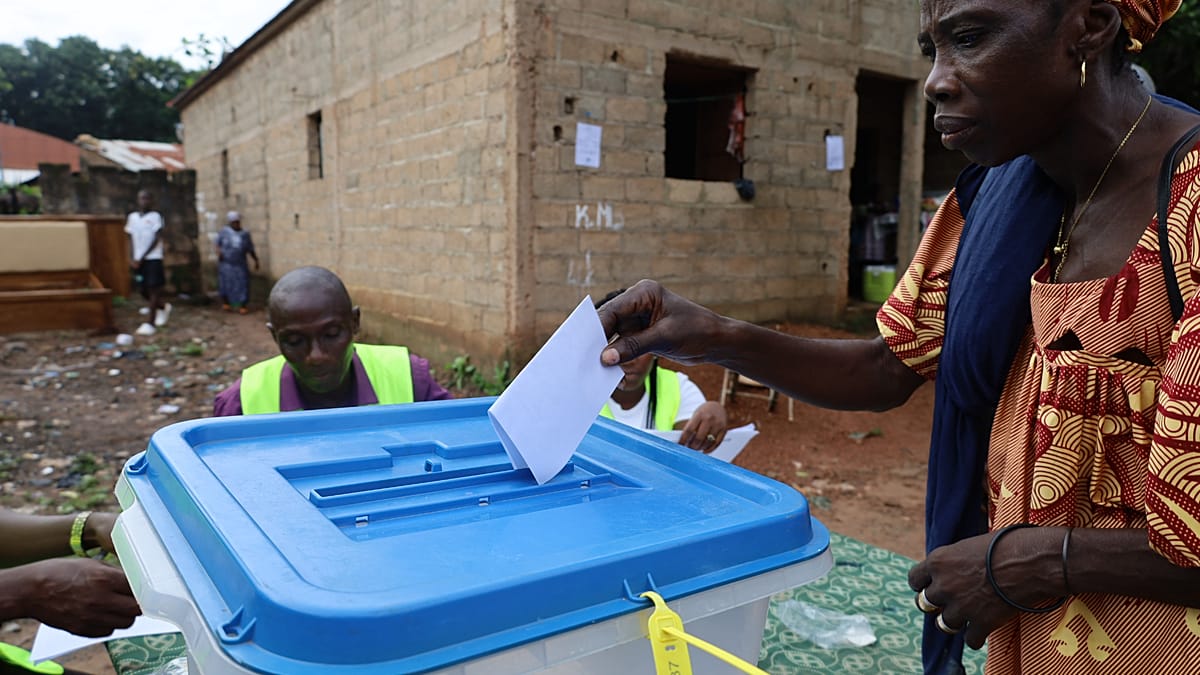
Polling stations in Guinea-Bissau opened at 08:00 CET on Sunday for a referendum on a new constitution, with a slow start reported in some areas. Security was reinforced in the capital, with National Guard and police deployed at key locations.
The vote is taking place amid political instability and is being contested by the opposition on several grounds. The text was already approved and published in the Official Gazette before citizens had a say, and it was drafted by the military transitional government without prior consultation. Bubacar Turé, head of the Guinea-Bissau Human Rights League, said neither political parties, civil society, nor religious and traditional leaders were consulted, and that campaigners for a "no" vote were not allowed to campaign — prompting the opposition to call for a boycott.
The military took power in November 2025 following disputed elections in which both former president Umaro Sissoco Embaló and opposition candidate Fernando Dias claimed victory. The junta subsequently installed General Horta N'Tam as transitional president under a temporary charter that bars him from running in future elections.
The proposed constitution, drafted by the self-styled National Transitional Council, would shift the country from a parliamentary to a presidential system, letting the head of state appoint and dismiss the prime minister and cabinet and dissolve parliament, while cutting the legislature from 102 to 65 seats. The military argues a smaller parliament allows for more substantive debate and that clearer presidential authority would reduce instability, while PAIGC spokesperson Muniro Conté said the changes weaken the prime minister and government and undermine the popular will expressed at the ballot box.
Since gaining independence from Portugal in 1973, Guinea-Bissau — West Africa's only Portuguese-speaking country — has endured repeated coups and attempted coups, including five successful takeovers since 1974. With around 2.2 million people, the country has the highest ratio of natural wealth per capita according to the World Bank, yet more than half its population lives in poverty. About 915,000 people are eligible to vote. Polls close at 17:00 GMT, with first provisional results expected on Tuesday.