Gaza disarmament plan: rare hope amid major obstacles
Hamas has agreed in principle to a US-brokered plan to disarm in exchange for an Israeli withdrawal from parts of Gaza, an official told the BBC, though Israel has not yet responded. The proposal is seen as a fragile diplomatic opening after a devastating war.
According to an official quoted by the BBC, Hamas has agreed to disarm under a proposal announced by President Donald Trump. Israel has not yet commented. The plan would involve Hamas handing over its weapons while Israel pulls out of the 70% of Gaza it currently occupies. Although it sounds straightforward, the deep distrust and political realities make it highly complex.
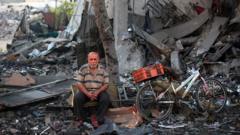
The humanitarian situation in Gaza remains catastrophic for more than two million Palestinians. The Hamas-run health ministry, whose figures the UN regards as reliable, says over 70,000 Palestinians have been killed by Israel during the war, and more than 1,000 since the ceasefire. UNICEF reports that more than 20,000 children have been killed since 7 October 2023, including at least 1,000 babies. Much of Gaza lies in ruins, with reports of an organised, officially sponsored demolition campaign using Israeli civilian contractors to destroy communities and infrastructure.
Many Palestinians believe Israel wants to make life so unbearable that they will leave, and officials in Jordan and Egypt say they see signs that powerful Israelis are working towards the ethnic cleansing of Palestinians. On the Israeli side, the Jewish majority – about 80% – still views Hamas as a deadly threat after the 7 October 2023 attack, in which Hamas and other militants killed almost 1,200 people, mostly civilians, and took 251 hostages.
The diplomatic process is tied to domestic politics. Israel holds a general election in late October; Prime Minister Benjamin Netanyahu trails in polls, and his corruption trial has slowed while he remains in office. The US faces midterm elections in November, and President Trump needs a Gaza success after failing to achieve victory against Iran. Netanyahu often claims he can handle Trump, but a public clash could hurt him politically. Hamas is also under severe pressure after losing many of its leaders and thousands of fighters, and it faces criticism from Palestinians for triggering the war. Its newly confirmed political leader, Khalil al-Hayya, dropped the movement's objections after intensive mediation by Egypt and Turkey.
Meanwhile, the occupied West Bank is on the brink of worse violence. The monitoring group ACLED says 2026 is on course to be the most violent year there in a decade, with settler attacks and Palestinian resistance on the rise. Finance Minister Bezalel Smotrich, sanctioned by several Western countries, is pushing for more settlement, undermining hopes of Palestinian statehood. Without a political horizon for Palestinians, analysts warn, the plan may fail and leave another generation mired in conflict.