Hamlet Avagyan: How Foreign Volunteers Recaptured Kupiansk
Captain Hamlet Avagyan, commander of the R.U.G. assault regiment, shares his experience of the Kupiansk operation and the role of foreign volunteer soldiers in Ukraine's National Guard.
Background
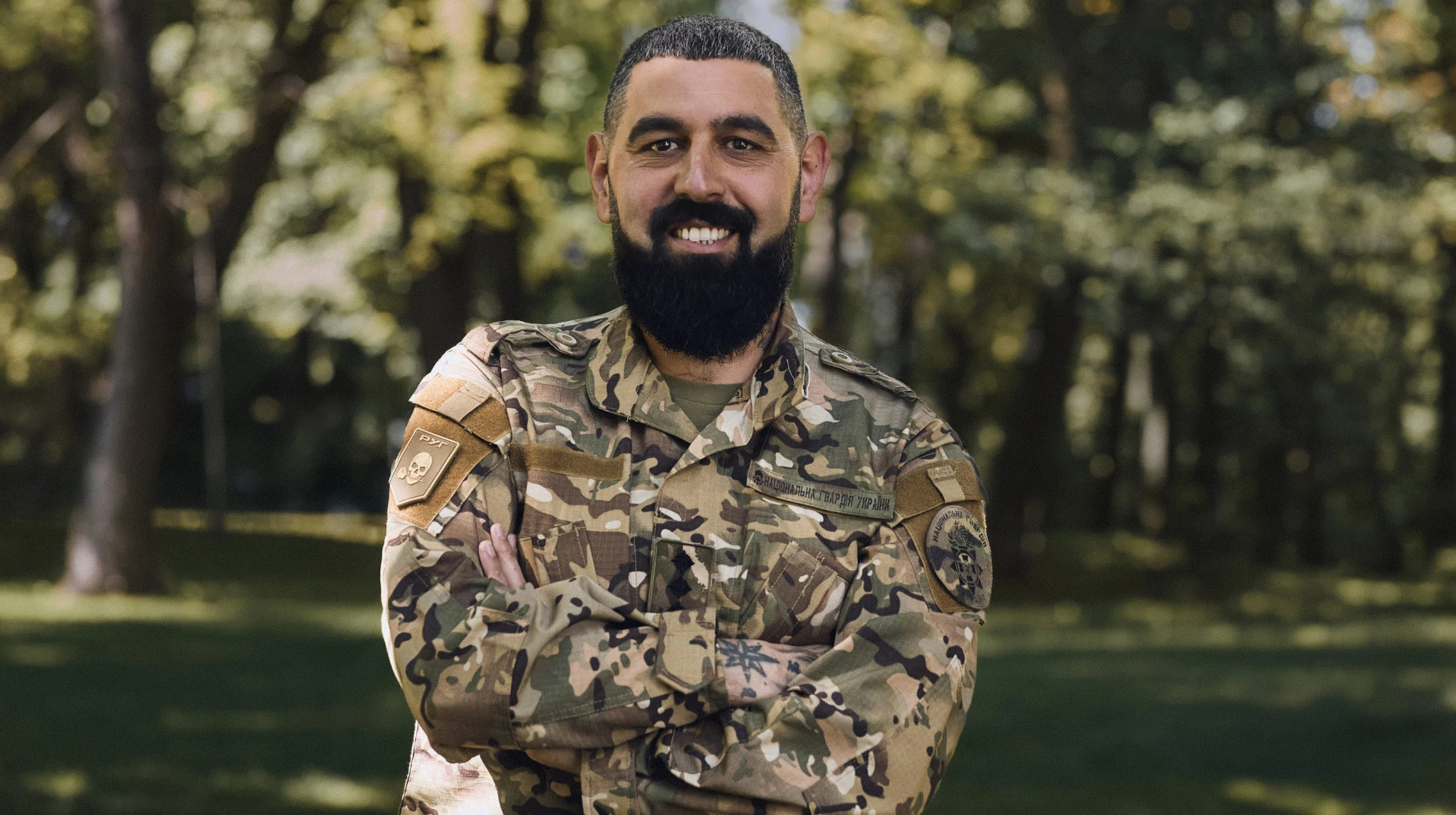
Hamlet Avagyan, recently promoted to major, commands the R.U.G. assault regiment, part of the Khartiia 2nd Corps of the National Guard of Ukraine. The regiment is mainly composed of foreign volunteer soldiers from around the world. Avagyan himself came to Ukraine from Armenia in 2015 to take part in the Anti-Terrorist Operation. Initially, he viewed his service as another entry on his unconventional resume, but over time Ukraine became his home.
Kupiansk Operation
In 2025, Avagyan's regiment joined the Khartiia Corps and was immediately deployed to the Kupiansk front, where they participated in a successful counter-offensive. This was Ukraine's first successful counter-offensive in a long time. Avagyan emphasizes that urban warfare is the most difficult type of combat, and his troops trained specifically for it. The Russians did not expect an attack, and the element of surprise ensured success. Avagyan notes that Russian forces struggle to defend a wide front line simultaneously.
Tactics and Motivation
Avagyan relies on surprise tactics, and his soldiers are trained to evade Russian FPV drones. Only 1% of his men were killed by drones during the campaign. He also collects Russian soldier identification patches, including from the dead. Avagyan's motivation to fight is tied to his friendship with Dmytro Kotsiubailo ("Da Vinci"), whom he met in Avdiivka. This friendship convinced him to stay in Ukraine.
Path to Ukraine
Avagyan was born in Yerevan, served in the Armenian army, and later worked as a surveyor, but that did not suit him. He participated in the 2008 Russia-Georgia war and later conducted special operations in the Middle East. In 2015, he came to Ukraine and after three months decided to stay, joining the 130th Reconnaissance Battalion. His unit started as a 12-person group and grew into a regiment.