Construction of Estonia's Baltic Defence Line delayed by half a year
Work on the next strongpoints of the Baltic Defence Line on Estonia's eastern border has slipped by about six months because of disputes over a public procurement. Construction is expected to resume at the end of the first or start of the second quarter of next year.
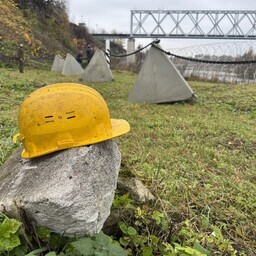
Estonia is building a section of the Baltic Defence Line, made up of concrete bunkers, anti-tank ditches and obstacles, along its eastern border. Construction of the next stage has been delayed by about six months because of disputes over a public procurement. The delay also raises a question over whether the project can be finished by the end of 2027.
What has been built
Two strongpoints are ready so far, containing 28 bunkers in total. The plan is for roughly 40 such strongpoints and about 600 bunkers. The strongpoints will be located in northeastern and southeastern Estonia. According to the plan, the defensive zone may reach up to forty kilometres into the country's interior.
Why work was delayed
Construction was due to begin in the third quarter of this year, but disputes arose over the state procurement. Armin Siilivask, project manager at the Centre for Defence Investment, told the Estonian public broadcaster's programme "Aktuaalne kaamera" that about half a year had been lost because of the disputes. He said the aim is to continue building at the end of the first or the beginning of the second quarter of next year.
Siilivask said it cannot currently be claimed with full certainty that the work will not be finished by the end of 2027. Besides the possible price, the authorities want to learn the production capacity of the procurement participants, after which a completion date can be set.
Costs and purpose
One bunker with its equipment costs about 60,000 euros. Around 60 million has been allocated for the Estonian part of the line. Ainar Afanasjev, inspector of engineering troops of the Estonian Defence Forces, explained that the obstacles are meant to slow and hold up an enemy, creating convenient targets once an enemy armoured vehicle or tank stops. Bunkers mainly help troops survive if the enemy opens fire and protect against artillery. Against a direct hit from an aerial bomb such protection is hard to count on, but a nearby explosion can be sheltered from.
Estonia, Latvia and Lithuania are building the line jointly. Each country builds its own section with its own funds and at its own pace.