Illegal Migration to Estonia Has Eased, but May Rise Again in Spring
Estonia's Police and Border Guard Board (PPA) says fewer illegal migrants have been caught in recent weeks than it had forecast. An official expects numbers could climb again next spring.
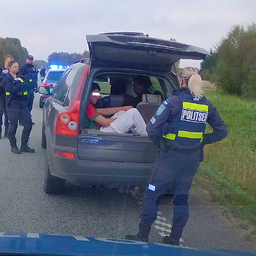
Estonia's Police and Border Guard Board (PPA) reports that illegal migration pressure on the country has eased, even though a significant increase had been warned of ahead of winter. According to PPA officials, the situation could worsen again in the spring of next year.
Background
This year, thousands of migrants from Africa and the Middle East have crossed the Belarusian border into Latvia. The source describes this as a long-running "hybrid attack" orchestrated by the regime in Minsk. After Poland and Germany tightened checks at their borders, smugglers have been trying to move people on to Scandinavia via Estonia.
A total of 388 migrants have been found in Estonia illegally. Of these, 148 have been returned to Latvia under EU rules. Fifteen people have been detained on suspicion of smuggling.
Numbers have fallen
PPA Director General Egert Belitšev warned on October 8 that migration pressure could rise considerably before winter. That has not happened. Indrek Aru, head of the Border Guard Bureau of the PPA's Northern Prefecture, told a radio show that numbers have fallen in both Estonia and Latvia, with only 14 migrants caught last week. He does not rule out an increase ahead of winter, however.
In recent weeks, migrants have been found only in Tallinn. Aru attributes this to covert travel: people are transported in enclosed cargo spaces or hidden under a carpet on a car's back seat. Spot checks take place on the Estonian-Latvian border and inside Estonia, but not every vehicle can be inspected.
Smugglers often come from Estonia, Latvia, Lithuania, Poland or Ukraine, while some are legal residents of the Schengen Area helping relatives or fellow citizens.
Tensions in detention centers and the issue of minors
Tensions have risen in detention centers, usually over everyday matters. Aru said friction between ethnic groups is also growing, though no serious incidents have occurred. Illegal migrants are currently housed at the detention facility in Pärnu.
Deportation is a lengthy process, as individuals' identities and routes of entry must be established, often with several interpreters. Since mid-October, the Social Insurance Board has represented all unaccompanied minors in PPA proceedings to relieve the burden on local governments. The PPA has set up a committee to assess ages.
Aru suggests that stricter controls in Poland and Lithuania have shifted the illegal route further north, and he expects numbers to keep rising next spring.