Estonia Faces Data Center Boom: Requests Total 2,900 MW, Nearly Double National Peak Demand
Developers have asked Estonia's grid operator Elering to connect seven data center projects totaling 2,900 megawatts, while the country's peak electricity demand is 1,700 megawatts. Most projects are clustered in western Estonia.
Developers in Estonia have applied to connect data centers with a combined capacity of 2,900 megawatts to the grid, almost twice the country's current peak electricity demand of 1,700 megawatts. The seven applications went to Elering, the national grid operator. The proposed artificial intelligence (AI) and cloud campuses could affect both electricity prices and grid stability.
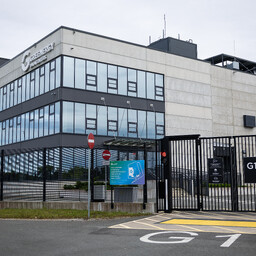
Only one next-generation facility operates in the country today: Greenergy Data Centers' site in Hüüru, near Tallinn. It draws just 2 megawatts, but is expected to scale up to 200 megawatts by early 2028.
Western Estonia as the main hub
Most of the planned capacity lies along high-voltage lines in the Lääne-Nigula and Lääneranna municipalities, mainly around Risti and Lihula. In Risti, Estonian renewable energy company Sunly and Norway's Magnora Data Center are developing a campus that would initially connect at 180 megawatts and could grow to 400 megawatts if the local substation is upgraded. The buildout is estimated at €1.7 billion. Developer Evecon is pursuing a 41-hectare industrial park with two data center buildings and up to nine industrial facilities, expected to create about 150 jobs. In Lihula, Evecon plans a 100-megawatt data center, while Norway's Northern Europe Energy Group has proposed a 136-hectare site with an initial 100 MVA and up to 1,100 MVA later.
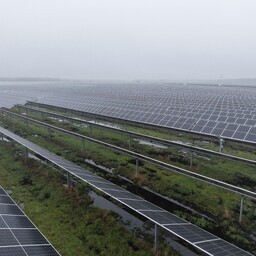
Lääne-Nigula Mayor Janno Randmaa said Sunly's project is the most advanced because the company is pairing it with a local solar park. For the other projects, municipalities still lack clarity on energy and cooling-water needs. Residents have so far mostly asked about water use and noise.
Other regions and the state's position
In Tapa, Estonian firms Sustainable Investments and Sinfra, together with Finland's Ehrnrooth business family, are considering an investment of up to €3.4 billion. Evecon also has projects in Varja and near Kilingi-Nõmme; the latter prompted a local council dispute and the collapse of the governing coalition.
Estonia's Ministry of Justice and Digital Affairs considers domestic data centers important for critical digital services. The country has joined the European Commission's AI gigafactory joint procurement, pledging €20 million over 2028–2032. The ministry warns that closed campuses serving a single foreign tech giant bring minimal economic benefit.
Marko Allikson, a board member at Baltic Energy Partners, said that if capacity is built without new generation, Estonia will depend more on imports from Finland. Still, demand may barely exceed 20 megawatts next year. Energy expert Arvi Hamburg added that higher consumption could lower grid fees for ordinary consumers, though rapid load swings pose technical risks.