Estonian commentator: mid-sized towns, not Tallinn, are the best place to raise kids
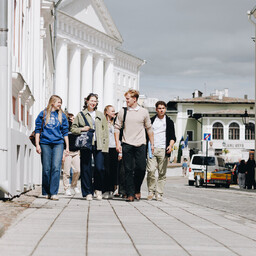
Estonian commentator Raul Rebane argues that Estonia's county centers of 10,000–20,000 residents offer the ideal environment for children, letting them move independently and safely between school, hobbies and home.
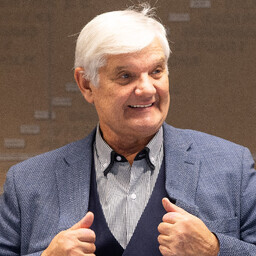
Estonian journalist and commentator Raul Rebane has published a piece on which kind of place is best suited for raising children — concluding that it isn't the capital, but a mid-sized town.
He bases his argument on a conversation with Icelandic coach Vesteinn Hafsteinsson, who has trained discus thrower Gerd Kanter. Having lived and worked in several Nordic towns, the coach believes the best setting for children is a town of roughly 10,000 to 20,000 people. Such places tend to have solid schools and strong opportunities in sports and music, but their biggest advantage is the time saved by short distances, along with safety.
Getting around on their own
Nordic research uses the term "children's independent mobility" — the ability of 10- to 14-year-olds to get themselves from school to practice, music lessons and home without an adult. In a big city, that route can eat up an hour or more; in Moscow, a bus or metro trip can take up to two hours, whereas in a normal-sized town the same trip takes 20 to 40 minutes, often on foot or by bike.
Rebane invokes the idea of a "Goldilocks zone" — a town large enough to offer real choices, yet small enough for a child to reach them unaided. According to the studies he cites, children's independent mobility is notably restricted in countries including France, Israel, Brazil, Ireland, Australia, Portugal, Italy and Canada.
He points to Estonian county centers such as Viljandi, Võru, Rakvere, Kuressaare and Haapsalu as near-perfect examples of this model: they offer schools, sports, music and services, yet can be crossed by bicycle in 10 to 15 minutes. As illustration, he notes that the last individual Olympic champion from Tallinn was speed skater Ants Antson, back in 1964, even though the capital holds roughly as much population, money and infrastructure as the rest of Estonia combined.
Rebane concludes that Estonia follows the Nordic and German model, where children move around independently, rather than the car-dependent Anglo-Saxon and Southern European model in which an adult escorts a child everywhere.