Estonia Tops OECD Tax Competitiveness Ranking for 13th Year Running
The US think tank Tax Foundation has ranked Estonia first among OECD members in its annual International Tax Competitiveness Index for the 13th consecutive year. Latvia is noted for an efficient system of taxing labour income, while France ranks last.
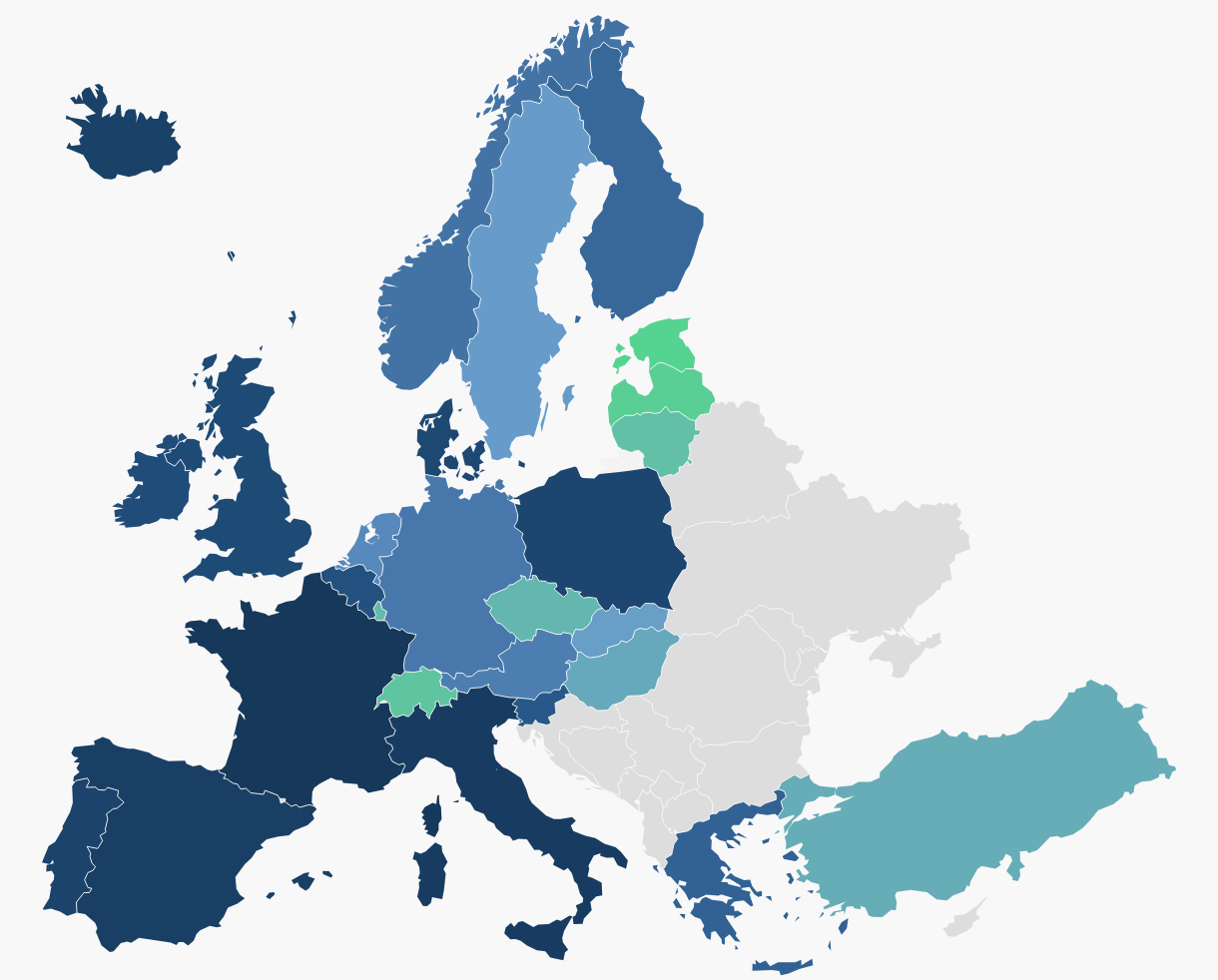
Estonia has once again been named the country with the most competitive tax system among members of the Organisation for Economic Co-operation and Development (OECD), the 38-nation intergovernmental body founded in 1961 to promote economic progress and global trade. It is the 13th year in a row that Estonia leads the annual International Tax Competitiveness Index, published by the Tax Foundation, a Washington, DC-based American think tank.
Why Estonia is first
The Tax Foundation attributes the top score to four features of the Estonian system:
- a 22 percent corporate income tax that applies only to distributed profits;
- a flat 22 percent tax on individual income that does not cover personal dividend income;
- a property tax levied only on the value of land, not on real property or capital;
- a territorial system that exempts foreign profits earned by domestic companies from domestic taxation, with few restrictions.
Other high-ranking countries
According to the think tank, Latvia, which recently adopted the Estonian model of corporate taxation, also has a relatively efficient system for taxing labour income. New Zealand has a fairly flat, low-rate individual income tax, a broad-based VAT, and no taxes on inheritance, property transfers, assets or financial transactions. Switzerland's corporate tax rate is 19.5 percent, and Lithuania's is 17 percent; Lithuania also lets businesses fully expense capital investment in machinery, equipment and intangible rights.
Lowest-ranked
France has the least competitive tax system in the OECD. Its top corporate tax rate, at 36.1 percent including surtaxes, is the highest in the group, and it applies several property taxes, including a wealth tax on real estate. Its VAT covers about 50 percent of final consumption.
The Tax Foundation notes that four of the five bottom-ranked countries have above-average corporate tax rates and unusually narrow VAT bases, covering 35 to 50 percent of final consumption. Four of the five also apply digital services taxes, financial transaction taxes and inheritance taxes.