Table used for Tartu Peace Treaty talks goes on display at Estonia's Foreign Ministry
The table at which Estonia and Soviet Russia negotiated the Tartu Peace Treaty in 1919–1920 is temporarily displayed at the Estonian Ministry of Foreign Affairs in Tallinn. It was moved there while the Tartu City Museum is being renovated.
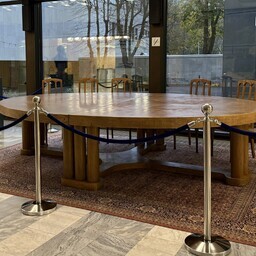
The oval wooden table at which Estonian and Soviet delegations negotiated the Tartu Peace Treaty in 1919–1920 is now temporarily on display at the Ministry of Foreign Affairs in Tallinn. The treaty was signed on February 2, 1920, in Tartu, Estonia's second-largest city. The display matters because the treaty is one of the founding documents of the Estonian state.
What the treaty did
The agreement ended the Estonian War of Independence, which lasted almost 18 months after Estonia declared independence. It was one of the young state's first major achievements in international relations. The treaty set Estonia's eastern border, and Soviet Russia recognized Estonian independence de jure, voluntarily renouncing for ever all rights of sovereignty it had held over the Estonian people and territory. It was also the first international act to recognize the Soviet government.
The table and its move to Tallinn
The table is unusually large, at 3.4 by 2.4 meters. It was known as the peace table even before the negotiations, as it was believed that people sitting around it would find common ground despite their differences. It is at the ministry while the Tartu City Museum undergoes renovation, and was transferred to Tallinn as part of the Athens 2026 evacuation exercise, which practiced protecting valuable cultural heritage in a crisis.
Rasmus Lumi, undersecretary for administrative affairs at the ministry, said the table has enormous symbolic significance and value. The ministry wants guests, including foreign visitors, to see it, so that it can tell them the history of Estonia and of diplomacy. It will also look for opportunities to hold signing ceremonies of greater symbolic significance at the table.
Foreign Minister Margus Tsahkna (Eesti 200) said the treaty reminds us that what seems impossible can become reality. He added that with the will to defend its freedom and the support of allies, even a small nation can defeat a far larger adversary.