Estonian employers: government's refusal to cut unemployment insurance rate is unjustified
Estonia's Central Union of Employers has criticized the government's decision not to lower the unemployment insurance premium rate, despite the proposal being backed by the Unemployment Insurance Fund's council. The fund's reserves already exceed 600 million euros.

The Estonian Central Union of Employers considers the government's decision to keep the current unemployment insurance premium rate unchanged to be unjustified.
On August 31, the Unemployment Insurance Fund's management board proposed to the government that the current 2.4% rate be maintained in 2027, with a reduction to 2.1% starting in 2028. Under the plan, the employee share would fall from 1.6% to 1.4%, and the employer share from 0.8% to 0.7%. The proposal was also supported by the Fund's council, which includes representatives of employers, trade unions and the state — among them two representatives of the Central Union of Employers.
Council member's assessment
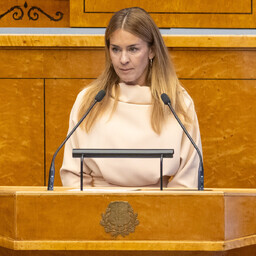
Hando Sutter, the union's executive director and a member of the Fund's council, said it is difficult to understand why the government is ignoring the council's proposal, which he said was based on thorough analysis of various risk scenarios and solid preparatory work by the fund's board.
The Unemployment Insurance Fund's net assets currently exceed 600 million euros. Last year the state paid the fund an average annual return of about 2% for using its reserves, while borrowing on the market through bond issues at 3.5% annual interest. According to the fund's calculations, if the rate were lowered as proposed, reserves would still total roughly 582 million euros by the end of 2030 — enough to cover potential risks.
Sutter explained that unemployment insurance contributions are collected to protect people in case they lose their jobs, and if the necessary funds and reserves are already sufficient, there is no reason to collect more from workers and employers than the system needs. He noted that 50 million euros a year is money that could instead remain with people and businesses.
Sutter added that the fund's example shows the public sector can cut costs and operate more efficiently, saying the state should follow suit rather than cover the rising expenses of less efficient state institutions.