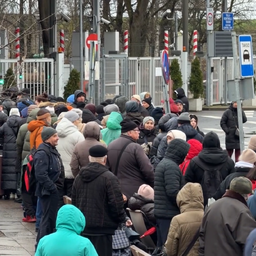
Former oil shale workers in Estonia's Ida-Viru County seek jobs: new vacancies exist, but pay is lower
As oil shale energy jobs are cut in Estonia's Ida-Viru County, new jobs are appearing, but former miners and energy workers do not always find positions with comparable conditions and pay.
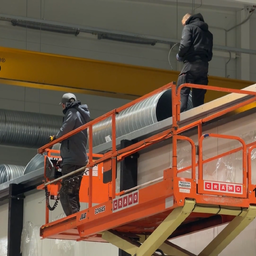
In Estonia's north-eastern Ida-Viru County, where the oil shale energy sector is shedding jobs, new positions are also appearing. In the Kohtla-Järve industrial park, the company Birger is expanding its production of metal containers and is recruiting staff. Yet despite European support and the arrival of new businesses, former miners and energy workers do not always manage to find work with comparable conditions and salary. This was reported on Saturday, 21 November, by the programme "Narva Studio. What Matters to the People" on the ETV+ channel.
A new plant in Kohtla-Järve
Birger, which already has a facility in Avinurme, opened a new plant in Kohtla-Järve. It covers the full production cycle: from preparing metal blanks and welding to painting and shipping finished goods. According to Birger chief executive Aleksei Männiste, the company needs workers for the blank preparation area, operators of laser cutting and bending machines, as well as painters and welders.
The company had originally considered expanding in Harju County, but funding from the Just Transition Fund meant the new production site was established in Ida-Viru County.
Support and reality
The unemployment insurance fund offers former energy sector employees special support: when moving to another industry, they can receive an allowance equal to 40% of their previous average salary. A new job must be found within 150 days.
The first major layoffs in the oil shale sector began as early as 2019. Some people have found work in other fields, but working conditions and pay do not always match what they had before.
Former miner Danute Seman spent about a year and a half without work after being laid off in 2023. She eventually took a cleaning job at the company Shroma, where she cleans production premises. The work is still physically demanding, though somewhat easier than before. "Maybe it's easier than in the mine, but it's still rather hard," Seman admits.
Igor Rubin, who worked in mines for about 20 years, became a bulldozer operator at Kiviõli Keemiatööstus after being laid off. He considers his current pay unjustifiably low for a skilled worker with such experience. "The pay is humiliatingly low. Shop assistants at Alko City get much more," Rubin complains.
The report's author concludes that, despite support measures and new jobs, the labour market situation in Ida-Viru County remains difficult.