Estonian intelligence chief: Russia steps up information war after Ukrainian strikes
Colonel Ants Kiviselg, head of the Estonian Defence Forces Intelligence Centre, says Russia has intensified its information warfare against the West, including threats and demagoguery, in response to successful Ukrainian attacks on its oil refineries and infrastructure.
/nginx/o/2025/06/03/16892732t1hc3b9.jpg)
Russia has intensified its information war against the West after Ukraine successfully attacked several oil refineries and infrastructure facilities on Russian territory, said Colonel Ants Kiviselg, head of the Estonian Defence Forces Intelligence Centre.
According to Estonian public broadcaster ERR, the highest combat intensity last week remained in Donbas, particularly in the areas of Kostiantynivka, Lyman, and Pokrovsk. Kiviselg noted that although Russia further increased combat activity, reaching about 270 combat contacts per day, it did not achieve significant gains on the front.
He stressed that despite Russian dictator Vladimir Putin's claims of major successes on the front lines, Russia has actually not achieved any substantial battlefield gains. Dissatisfaction with failures has led Russia to step up long-range strikes in its terrorist campaign.
Kiviselg said Ukraine faced problems intercepting ballistic missiles during these attacks. At the same time, Ukraine has expanded the range of targets and strikes against Russian territory. He divided this into two major campaigns: isolating the Crimean peninsula and neutralizing Russia's energy infrastructure and export potential.
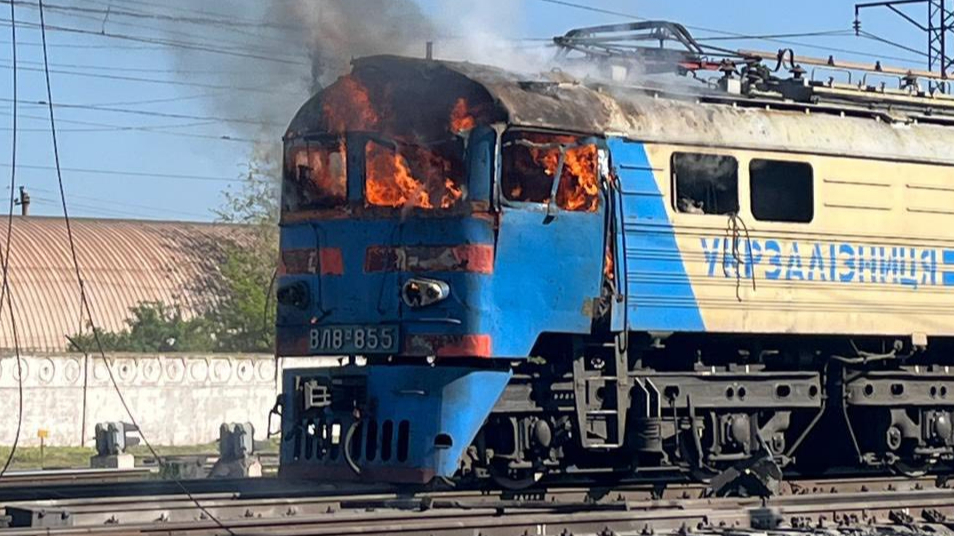
As a result of systematic strikes, at least six Russian airfields were attacked, with at least seven combat aircraft and an unknown number of Shahed drones destroyed or damaged. Strikes also continued against transport infrastructure and ports, particularly the sea ports of Ust-Luga and Vysotsk in the eastern Gulf of Finland, as well as a ferry terminal near Kerch. In the Sea of Azov, at least 19 ships supplying Crimea with fuel or military equipment were attacked. Kiviselg described these attacks as relatively successful.
He added that Russia reacts very sensitively to Ukraine's successful long-range strikes, using hostile rhetoric, threats, and demagoguery, mainly blaming the West for aiding Ukraine. The Baltic states and Finland have also become targets of this information campaign, with Russia claiming these countries allow Ukraine to use their airspace to attack Russia.
Kiviselg noted that the Kremlin has periodically started claiming that this is no longer a special military operation but a full-scale war, as several European countries and the US support Ukraine with information, intelligence data, equipment, and weapons. According to him, all these claims are likely part of a coordinated information operation aimed at creating a sense of threat of possible escalation in the West and undermining unity in further support for Ukraine.
However, he emphasized that although topics about possible Russian provocations and even military preparations against the Baltic states are being publicly discussed, this should currently be seen more as part of Russia's information war. He confirmed that no military preparations for an operation in the Baltic states or the region are visible from Russia's side in the near future.