Central bank economist: All parties contributed to Estonia's rising debt
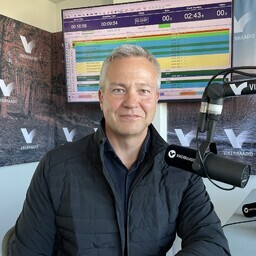
Bank of Estonia economist Kaspar Oja finds in analysis that every major ruling party over the past decade has contributed to the country's growing debt, not just the current coalition.

According to a new analysis by Bank of Estonia economist Kaspar Oja, Estonia's rising debt burden reflects years of decisions by every major ruling party, not only the current coalition.
Oja's review of Estonia's budget deficits over the past decade found that the largest structural deficits were accumulated under governments led by the Conservative People's Party of Estonia (EKRE) and the Center Party, accounting for 2.7 percent and 2.3 percent of GDP, respectively. They were followed by Isamaa and the Social Democratic Party (SDE) with 0.65 and 0.47 percent of GDP. Meanwhile, the current coalition's Reform Party and Eesti 200 have accounted for 0.41 and 0.92 percent of GDP, respectively.
"Our public debt was low, so increasing it seemed attractive," Oja said. "But what began as one-off increases has turned into long-term spending." The biggest budget deficits emerged during the early years of the COVID-19 pandemic, when governments across Europe loosened fiscal policy.
Party leaders offered differing views. Isamaa chair Urmas Reinsalu said those decisions were broadly unavoidable and reflected a continent-wide response to the crisis. Center MP Andrei Korobeinik acknowledged his party's significant contribution to the deficit but argued the spending helped leave Estonia in stronger shape by 2021 than before the pandemic. He added that governments should be bolder about investing in major infrastructure projects during economic downturns.
EKRE chair Martin Helme disputed Oja's analysis, arguing much of the deficit attributed to his party resulted from supplementary budgets adopted by Reform and Center after they left office. "I refuse to accept the claim that I somehow wrecked Estonia's public finances in a single year," Helme said.
Despite disagreements over responsibility, Estonia's political parties broadly agree the budget must be brought back into balance over the next eight to ten years. Helme called for deep spending cuts alongside broad tax reductions, including eliminating the VAT increase, income taxes, excise taxes and the annual motor vehicle tax. Korobeinik instead advocated new revenue measures, including a windfall tax on banks, a digital tax targeting large technology companies, a progressive income tax and a smaller public sector.