Estonian PM: top civil servants' pay rise to slow down
Estonian Prime Minister Kristen Michal confirmed that the government has decided to slow the pay growth of top civil servants, a move that has already drawn criticism from judges.
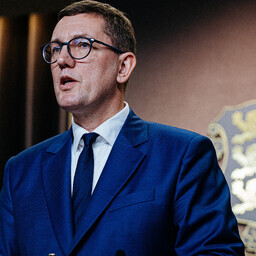
Estonian Prime Minister Kristen Michal confirmed on the TV programme "Esimene stuudio" that the government has decided to slow down the wage growth of senior state officials. He said similar steps had been taken before and expressed surprise that the decision had not yet drawn much media attention.
Michal noted that judges have already voiced dissatisfaction, as they had been counting on the planned pay increase. He pointed out that the current pay proportions between judges, members of parliament, ministers and committee chairs have become significantly skewed — ministers currently earn less than committee chairs, despite carrying far greater responsibility and workload. For this reason, the planned pay rise will be postponed, or rather, its pace will be reduced. According to the prime minister, the Riigikogu will likely need to settle the matter, since the imbalance between the pay of various officials has grown substantial.
Budget cuts
Speaking about the overall state budget, Michal stressed that the government intends to follow through on its promised spending cuts. For the third year running, spending has been reduced by ten percent, with exceptions for pensions, teachers' pay, defence capability and police, while the deficit is being cut by half a percentage point, as recommended by the Bank of Estonia and the Fiscal Council. He said that if future governments continue reducing the deficit at the same pace, growth in debt burden could be kept under control and the budget eventually brought into balance.
The prime minister also noted that a planned excise tax increase can always be cancelled, since changes that are more favourable to taxpayers are not subject to the six-month advance notice rule — something the government has done before, cancelling an excise hike shortly before it took effect. Whether such a decision will be made this time will depend on fuel prices in the spring of next year.
Top civil servants' salaries in Estonia are indexed, but amendments adopted in 2023 temporarily halved their growth rate in order to save 20 million euros over four years. The situation preceding that legal change had been expected to be restored by 2028.