Iceland rejects resuming EU accession talks in referendum
Icelandic voters have rejected a proposal to resume EU membership negotiations, with near-final results reported Sunday showing 52.5% against and 47.5% in favour. The advisory referendum laid bare deep divisions over fisheries, sovereignty and security.
The result
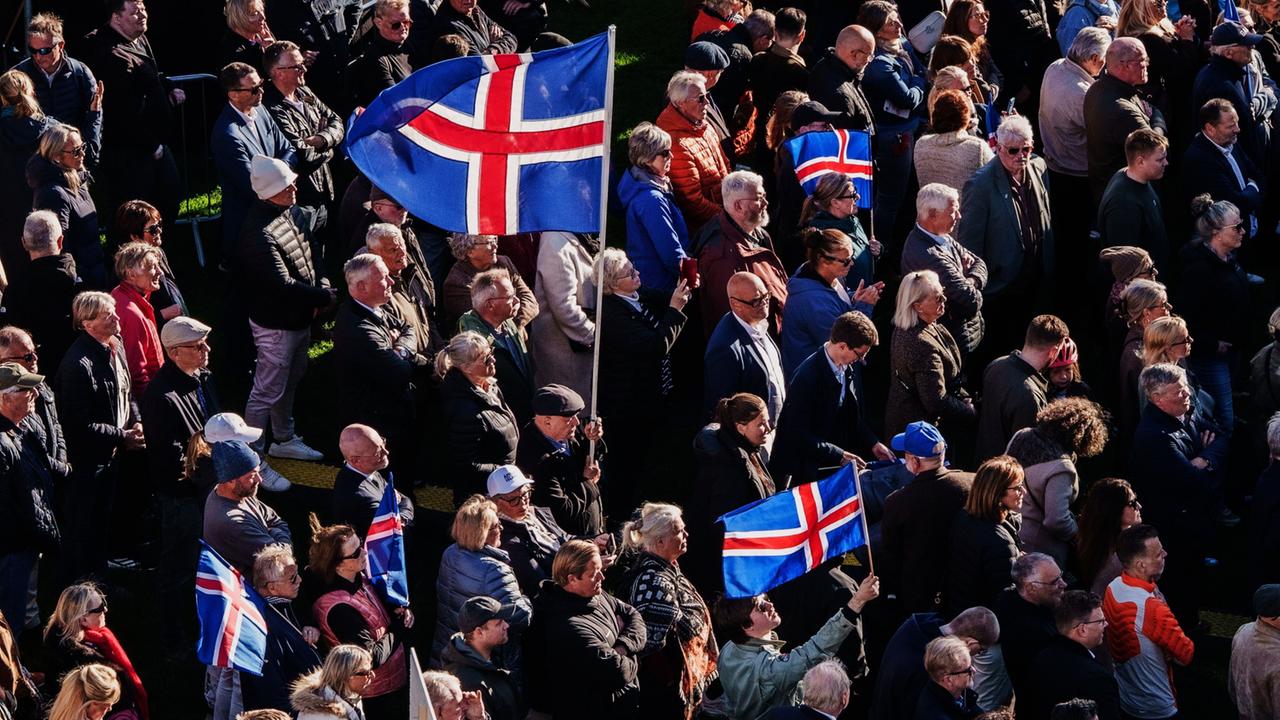
On Saturday, 29 August, Icelanders voted in an advisory referendum on whether the government should resume EU accession negotiations. According to Aftonbladet, citing Iceland's public broadcaster Rúv, by 8:45am on Sunday votes had been counted in all constituencies but one, with "No" at 52.5% against "Yes" at 47.5%.
What was at stake
The vote was not about EU membership itself, but about restarting talks that began in 2010. Tagesschau and Euractiv report the talks were suspended in 2013 after a change of government, while ORF states they stalled in 2015 — sources differ on the exact year. Had voters backed resuming negotiations, Iceland's foreign ministry estimated talks could start by year's end and take 18–24 months, with any resulting accession deal subject to a further referendum.
A deeply split country
Pre-vote polling pointed to an extremely close race. A Maskina survey (21–25 August) put "Yes" at 51.3% versus 48.7% "No"; a mid-August Gallup poll showed 51.5% "Yes" to 48.5% "No". But a poll published by Euractiv on Thursday already showed "No" edging ahead at 51%. Turnout was expected to be record-breaking: by Friday, 56,774 people — about 20% of roughly 270,000 eligible voters, including some 17,000 voting from abroad — had already cast ballots.
Fisheries dominated the debate. Iceland would become the EU's largest fishing nation if it joined, and small coastal fishermen feared losing ground to large domestic "quota king" companies or foreign competitors, even as some hoped EU membership might force the government to better protect their interests. Political scientist Eiríkur Bergmann of Bifröst University noted that, for the first time, EU officials signalled openness to a compromise — a special Icelandic-controlled fisheries zone. Business also leaned against membership: Bjarni Benediktsson, head of employers' association SA, said roughly two-thirds of members opposed joining.
Geopolitics in the background
Prime Minister Kristrún Frostadóttir had promised a referendum by 2027, but her government moved it up to summer 2026, citing a turbulent geopolitical climate — including repeated claims by US President Donald Trump regarding Greenland and the ongoing war in Ukraine. Foreign Minister Þorgerður Katrín Gunnarsdóttir, a leading advocate of resuming talks, said days before the vote that she had received serious threats over her position.
European reaction
Swedish broadcaster SVT described the outcome as "a setback for Brussels," noting the EU had hoped a "Yes" vote would boost its enlargement drive, particularly regarding the Western Balkans. European Parliament rapporteur Andreas Schieder had earlier called potential Icelandic membership a "great opportunity" for the bloc.