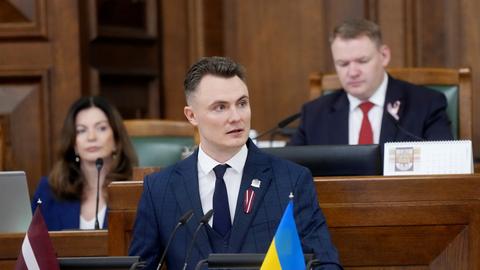
Education minister nominee Batņa proposes reform moratorium and possible review of "Skola2030"
Česlavs Batņa (AS), nominated as Latvia's Minister of Education and Science, wants a one-to-18-month freeze on new reforms to focus on fixing those already begun. He also says the "Skola2030" curriculum could be reviewed.

Česlavs Batņa (AS), nominated for the post of Latvia's Minister of Education and Science, plans to introduce a moratorium on new reforms lasting a year or a year and a half. During that time no new changes would be launched in the education sector; attention would go to carrying out reforms already under way and fixing their shortcomings. He outlined his intentions ahead of the government's confirmation in the Saeima, Latvia's parliament.
Reviewing existing reforms
Batņa said the changes already introduced must first be assessed and put in order, including the general education content framework "Skola2030" and the new school funding model "Programma skolā". He allows that the "Skola2030" curriculum might be reviewed and the education standard adjusted. Particular attention is planned for reading skills in primary school: he believes it should be checked whether the current teaching approach ensures children learn to read in the first grades.
Vocational education
The politician wants to improve vocational education by creating three levels, matched to young people's later education and employment plans. At the top level, students would obtain both a profession and secondary education while preparing for university studies. The second level would focus mainly on learning a profession and readiness for the labour market, while still allowing graduates to continue at university. The third, basic level would center on trade education, giving a specialty and the foundations of secondary education.
Ministry operations and cooperation
The third line of work concerns making the Ministry of Education and Science and its subordinate institutions more efficient, which Batņa says could also affect next year's state budget. He also intends to reduce bureaucracy and remove regulatory obstacles. The nominee promises to involve sector organisations more in decision-making; one of the first steps would be a consultative council for the education sector. School heads and teachers should hear about coming changes from the ministry, not from the media.
All tasks and deadlines would be set out in a so-called minister's commitment letter. Batņa did not name possible members of his office, saying only that they would be specialists tied to education.
Before entering the Saeima, Batņa headed secondary schools in Ikšķile and Ādaži. In the 14th Saeima he served on the Education, Culture and Science Committee and the Higher Education, Science and Human Capital Subcommittee, where he temporarily held the chair.