Israeli Emergency Expert: In a Crisis, Residents Are the First Responders
Haim Rafalovsky, disaster management coordinator at Israel's emergency medical service, tells Delfi that preparing for war and crises also means health care capacity and community readiness. He says October 7, 2023 showed that rescuers will not always reach the victims in time.
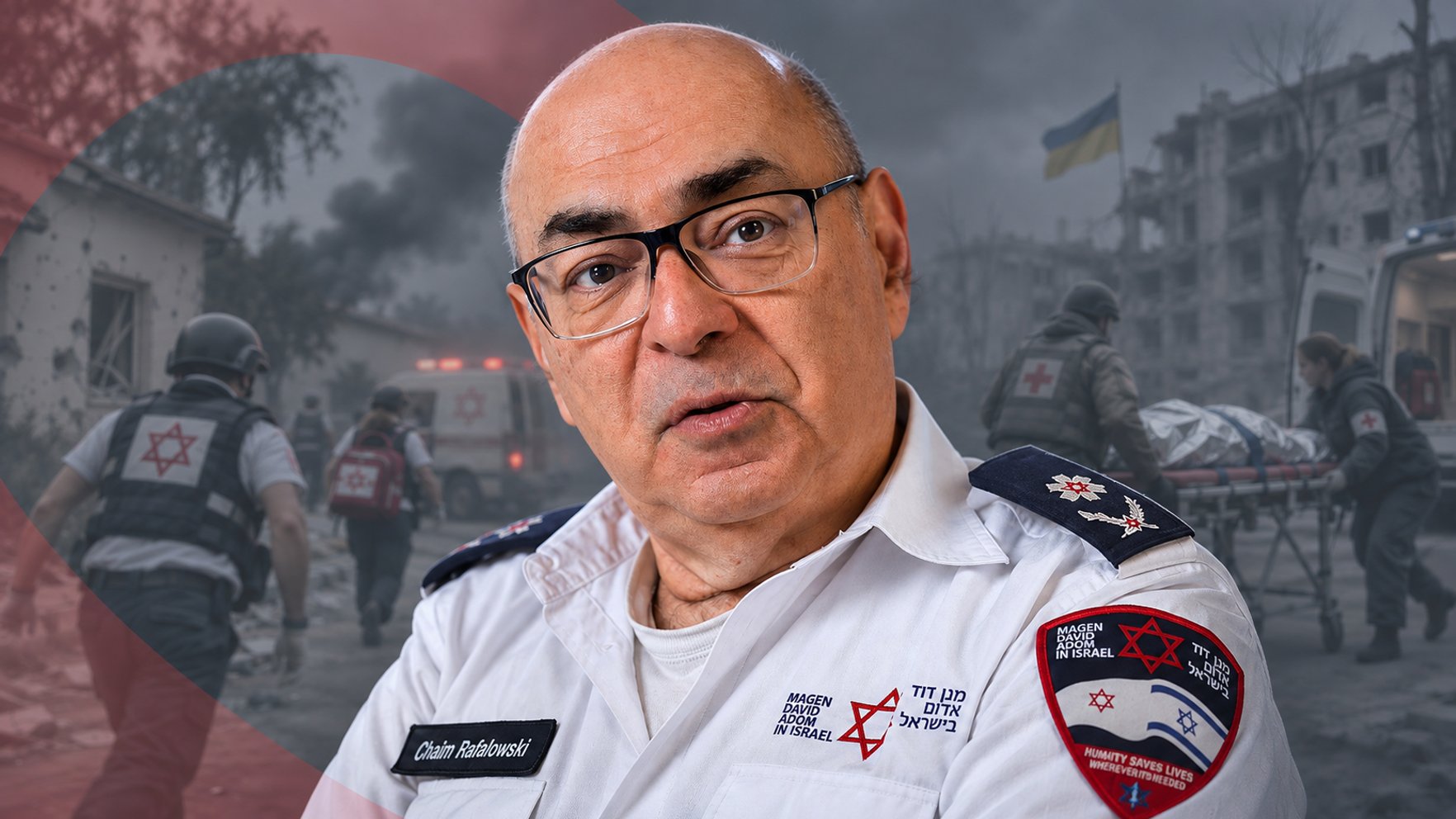
Preparing for war and large-scale crises takes more than weapons and an army: the capacity of the health care system and the ability of ordinary people to act in an emergency matter just as much. That is the view of Haim Rafalovsky, disaster management coordinator at Israel's emergency medical service Magen David Adom (MDA), in an interview with the Latvian portal Delfi. He argues that the first to give help will always be people from local communities. The topic is relevant in Latvia, where discussions on preparedness, prompted by Russia's invasion of Ukraine and growing threats, are dominated by the military side.
Health care as part of resilience
Rafalovsky dislikes the term "defence spending", since it usually refers only to the military sphere, while he sees public resilience as part of a state's ability to overcome emergencies. A country cannot get through a crisis without a strong health care system, he says, because people will fall ill during a war too, and there will also be wounded on the battlefield and among civilians. In his view, investment in health care pays off many times over.
The lesson of October 7, 2023
MDA is not a state body but the national society of the International Red Cross and Red Crescent Movement, and it provides emergency medical care across Israel. Its average response time is 6.8 minutes. However, on October 7, 2023, when the group Hamas invaded Israeli territory, dispatchers for the first time had to tell callers that they could not reach them. After that experience, more attention is paid to training residents, equipping them and teaching first aid. This is why MDA describes itself not as the first responder but as the second.
Hospital strain
Under Israeli Health Ministry rules, a hospital must be ready to admit patients equal to 20% of its bed count within 24 hours. For Soroka hospital in Beersheba, with 1,200 beds, that means 240 patients. On the day of the invasion, it received more than 400 casualties by 4 p.m., most of them seriously wounded. Volunteers and medics also helped victims in the living rooms of private homes, something emergency plans had not foreseen.
Rafalovsky says that for Latvia the scenario must first be defined – a limited drone or missile attack or a full-scale invasion – but the first precondition for preparedness is adequate infrastructure.