The Magic of Midsummer Night: Symbolism of Traditions and Ancient Latvian Beliefs
The article explores the symbolism of Midsummer Night traditions – bonfires, fern flower, morning dew, and fortune-telling – and their roots in ancient Latvian mythology.
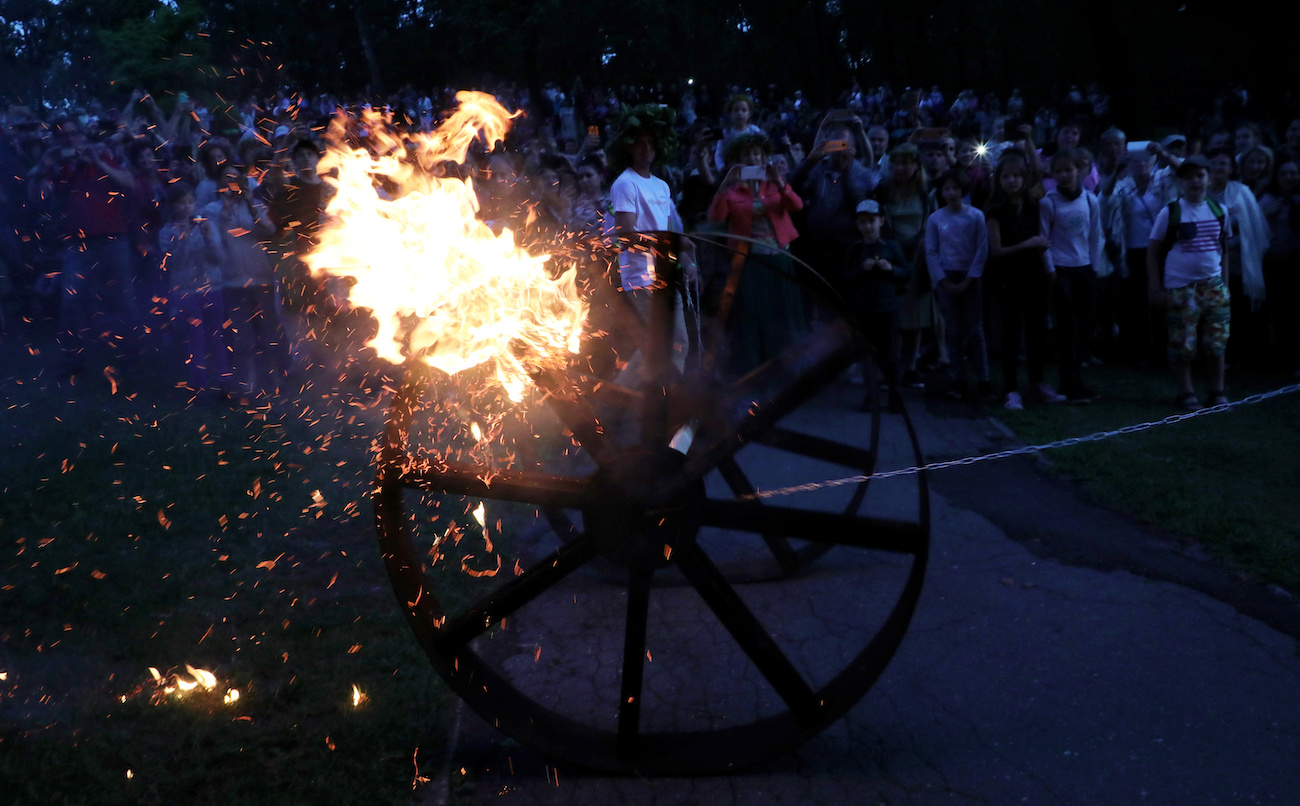
Midsummer Night bonfires are much more than just light and warmth. To ancient Latvians, they symbolized the sun, life, and purification. The higher the flames rose, the further their blessing reached. Fire was considered the purest and most powerful energy, connecting people with divine forces.
There were three types of bonfires. The first was a daytime ritual fire only for the family, used to honor the deity. In the evening, a pole with a burning barrel or wheel, called a pūdelis, was raised in a high place to invite visitors. The third fire was lit after sunset on the highest point to shine over as large an area as possible and bring blessings. People sang, danced, and jumped over it. Ritual bonfires were lit only in sacred places; no garbage or sausages were burned – only good quality wood was used.
The search for the fern flower is one of the best-known Midsummer myths. In ancient Latvian mythology, it symbolizes both physical creation and spiritual growth. In ancient times, it also served as a symbol of sex, since sexual intimacy was considered an act of physical and spiritual union. Finding it promised eternal happiness, prosperity, luck, and clairvoyance. Although no one has actually found it, the search itself provides a magical adventure.
Ancient Latvians believed that Midsummer was the most suitable time to conceive a child, as nature and people were at the peak of fertility, promoting the birth of healthy offspring. Therefore, lovers were particularly active during the celebration.
Līgo songs were not just entertainment – they served as prayers and magic spells to protect against evil and bring blessings. People sang to bless other people, houses, fields, and even livestock, thereby cleansing them of negativity. Only songs that bring happiness and fertility were sung.
On Midsummer Night, herbs had special meaning – they were gathered not for decoration but for protection. Rowan branches, nettles, and thistles were used to adorn doors and windows to ward off evil spirits, witches, and envious people. Morning dew was collected and used for washing – it was believed to grant beauty, health, and strength. Maidens believed that the morning dew would make them more beautiful.
Fortune-telling was an integral part of the festival. Maidens would weave wreaths and toss them into a river – if they floated together, marriage was imminent. Another method involved weaving a wreath from nine different types of flowers and sleeping with it on one's head; the person who removed the wreath in a dream would be the future husband. Alternatively, one would throw an oak wreath into an apple tree; the number of times it fell indicated the years until marriage.
It was believed that one must not sleep on Midsummer Night – sleeping brought laziness and bad luck, while staying awake gave strength. Singing until dawn not only drove away evil but also helped welcome the sun.