Japan watches for signs of change in Trump's foreign policy priorities
A week before a expected meeting of US, Chinese and Russian leaders at the APEC summit, Japan fears President Donald Trump may seek a quick diplomatic win after his midterm setback, at the expense of regional allies.
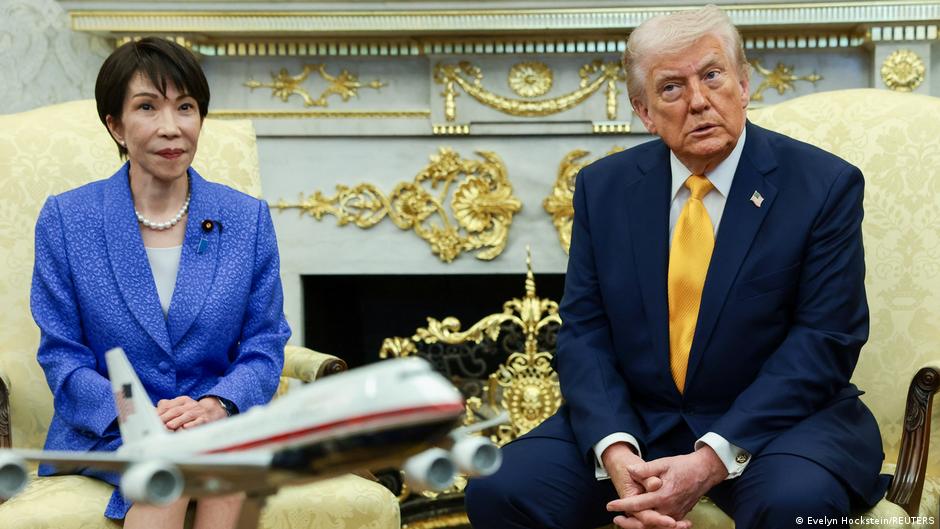
Japan is closely monitoring possible shifts in US policy toward the Indo-Pacific. The Asia-Pacific Economic Cooperation (APEC) summit is being held this year in the Chinese city of Shenzhen on November 18–19, and the leaders of the United States, China and Russia are expected to meet on its sidelines. Tokyo is concerned that US President Donald Trump, after his party's losses in the November 3 midterm elections, may pursue a fast diplomatic achievement that overlooks the interests of Washington's regional allies.
Japanese Foreign Minister Toshimitsu Motegi met US Secretary of State Marco Rubio on Monday in Paris, on the sidelines of a G7 foreign ministers' meeting. A Japanese Foreign Ministry statement said the sides agreed to advance security cooperation to strengthen the deterrence and response capabilities of the Japan-US alliance, and to maintain close communication on the Indo-Pacific situation. No further details were given.
Why Tokyo is uneasy
Sebastian Maslow, a professor of politics at the University of Tokyo, says Trump may turn to foreign policy as his domestic standing weakens. In his view, a US deal with China could allow Chinese President Xi Jinping to increase pressure on Japan, putting Prime Minister Sanae Takaichi in a difficult position, as Japan-China relations are already severely strained.
Margarita Estévez-Abe, an associate professor at Syracuse University's Maxwell School and an expert on Japanese politics, recalls that after the May summit with Xi, Trump described US arms sales to Taiwan as a good negotiating chip with China. Tokyo is also frustrated that Washington has not backed it over the rare earth export restrictions China imposed after Takaichi's comments on Taiwan last year; the Trump administration treats the dispute as Tokyo's problem.
Diversifying security partnerships
Estévez-Abe says Trump has not damaged the US-Japan alliance as much as he has strained NATO, but his outreach to Moscow and Pyongyang worries Tokyo. Maslow adds that Japan has no "plan B" if the alliance unravels. Building autonomous defense capability in the short term is unrealistic, given the limits of Japan's defense industry and a lack of key resources, including intelligence.
Over the past decade Japan has expanded cooperation with EU member states and NATO, built a quasi-alliance with Australia and joined several smaller frameworks in the region, including with the Philippines. The experts say Tokyo must keep protecting the alliance by raising defense spending and safeguarding economic security.