Japan Successfully Tests Reusable Rocket Prototype
Japan's space agency JAXA has successfully tested the RV-X reusable rocket prototype, which launched and landed at about 10 meters altitude. This marks a step toward cheaper space launches, competing with SpaceX and China.
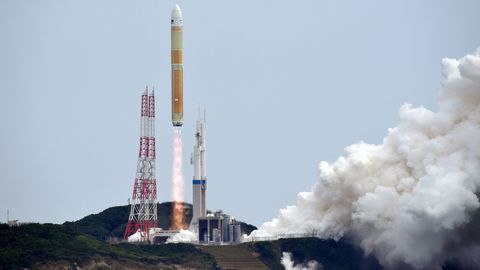
The Japan Aerospace Exploration Agency (JAXA) has announced the successful first test flight of its reusable rocket prototype, RV-X. The launch took place at JAXA's test site in Noshiro, Akita Prefecture. The rocket reached an altitude of approximately 10 meters before landing safely, with the flight lasting about 40 seconds.
RV-X is part of Japan's efforts to reduce space launch costs by introducing partially reusable rockets. Most current rockets are single-use, with the first stage being the most expensive component. Reusability can significantly lower costs. The U.S. company SpaceX has operated its reusable Falcon 9 rocket since 2017, and China recently conducted a successful test of a similar technology.
Japan aims to improve the international competitiveness of its rocket industry. Its flagship H3 rocket successfully launched in June this year, following a previous failed mission. RV-X was developed jointly by JAXA and Mitsubishi Heavy Industries. The rocket has a diameter of 1.8 meters, a length of 7.3 meters, and is equipped with an upgraded engine and four shock-absorbing landing legs.
JAXA plans to send RV-X to an altitude of about 100 meters in future tests. The agency also collaborates with France and Germany on reusable rocket development. Last June, a subsidiary of Honda became the first Japanese company to successfully launch and land a reusable rocket.