New Saeima Begins Work: Commentary Asks If It Is Ready for Unpopular Decisions
In a Latvijas Avīze commentary, journalist Anita Daukšte assesses the first session of the 15th Saeima and asks whether parliament and prime minister-designate Andris Kulbergs are ready for unpopular decisions, including spending cuts.
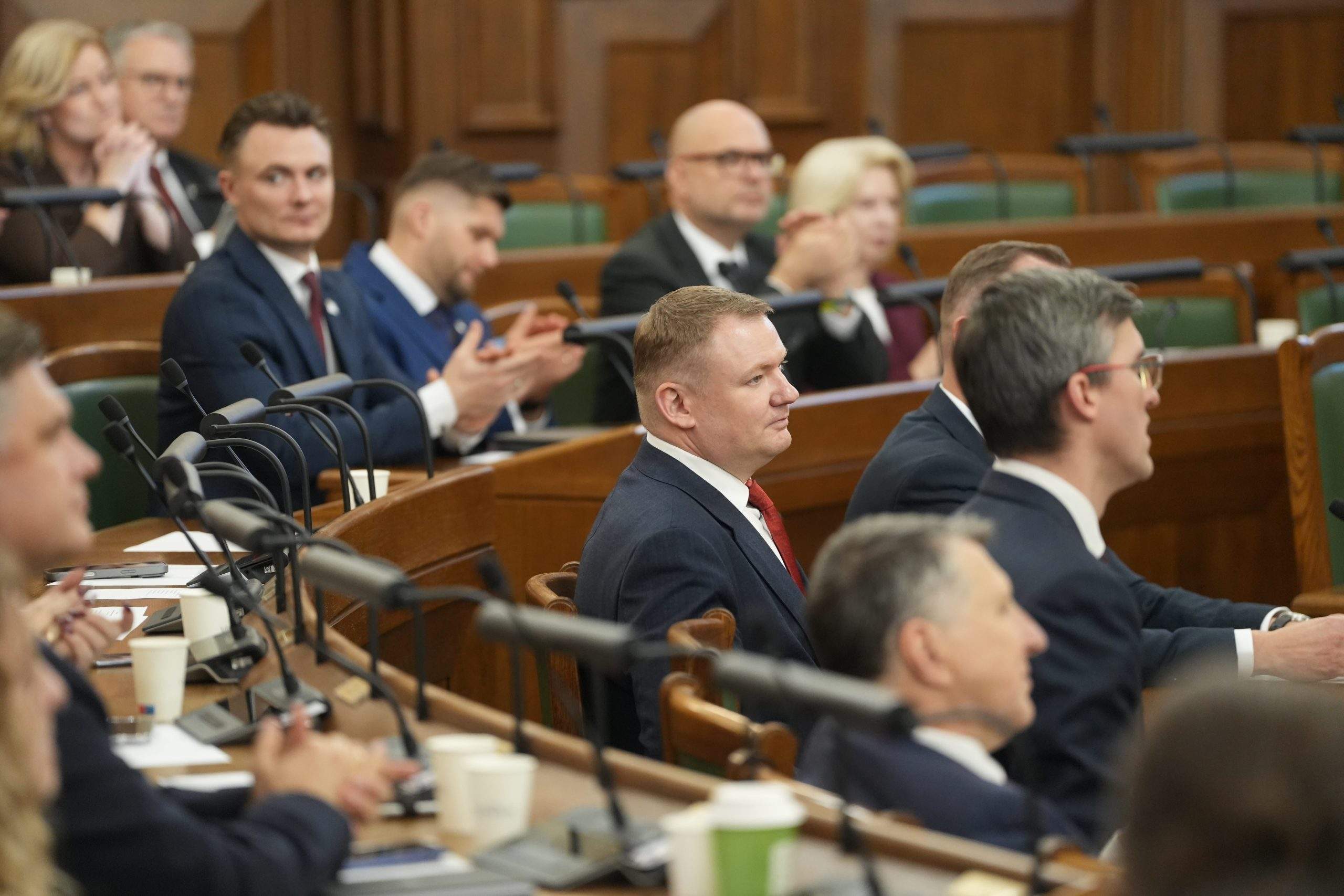
Latvia's parliament, the 15th Saeima, held its first session on 3 November, and the new deputies took a solemn oath to work for the benefit of the Latvian people. The event is discussed in a commentary by Anita Daukšte in the newspaper Latvijas Avīze; it is the author's subjective opinion and may differ from the editorial board's position. The topic matters because the relationship between parliament and the incoming government will shape how the changes demanded by voters are carried out.
An unusual composition
The makeup of the Saeima is unusual: the United List won 41 seats, which the source describes as the largest number ever held by a single faction. Daukšte argues this gives parliament a chance to restore its influence and prestige in society.
Addressing the deputies, President Edgars Rinkēvičs said such a mandate makes it possible to achieve a great deal in security, welfare and demography. Change, he noted, means both popular and unpopular decisions, but even bold decisions must be well thought through, explainable and justified.
Kulbergs' promised austerity
The author notes that recently it is mainly prime minister-designate Andris Kulbergs who speaks about unpopular decisions. He mentions serious cuts to budget spending, a review of ministries' functions and of the structure of public administration, and the postponement of some plans. A figure of 500 million euros in spending cuts is cited. Daukšte points out that budget decisions are made by the Saeima, not the prime minister, and that no outline of the budget has yet been seen. She adds that cuts of that size could not be achieved even if public administration were abolished altogether.
The European politics outlet Politico has called Kulbergs a populist.
Comparison with Dombrovskis
The author names Valdis Dombrovskis as the only politician who managed to adopt unpopular decisions and emerge from them politically unscathed. In 2009 he implemented an austerity regime, cutting pensions and the incomes of public sector employees. He was backed by the party Vienotība; Daukšte asks who stands behind Kulbergs.
Government and parliament
Kulbergs plans to propose a short government declaration and, for the first time, a declaration for the Saeima. Daukšte stresses that the government does not assign tasks to parliament, but the other way round, and suggests the Saeima should draft such a declaration itself. She also asks how Edvards Smiltēns, just re-elected Speaker of the Saeima, will react to the new model.