New Satellite Imagery Shows Renewed Oil Leak from 2024 Black Sea Wreck
Satellite images reveal a fresh oil slick near the sunken tanker from the December 2024 spill off Russia's Black Sea coast, raising environmental concerns.
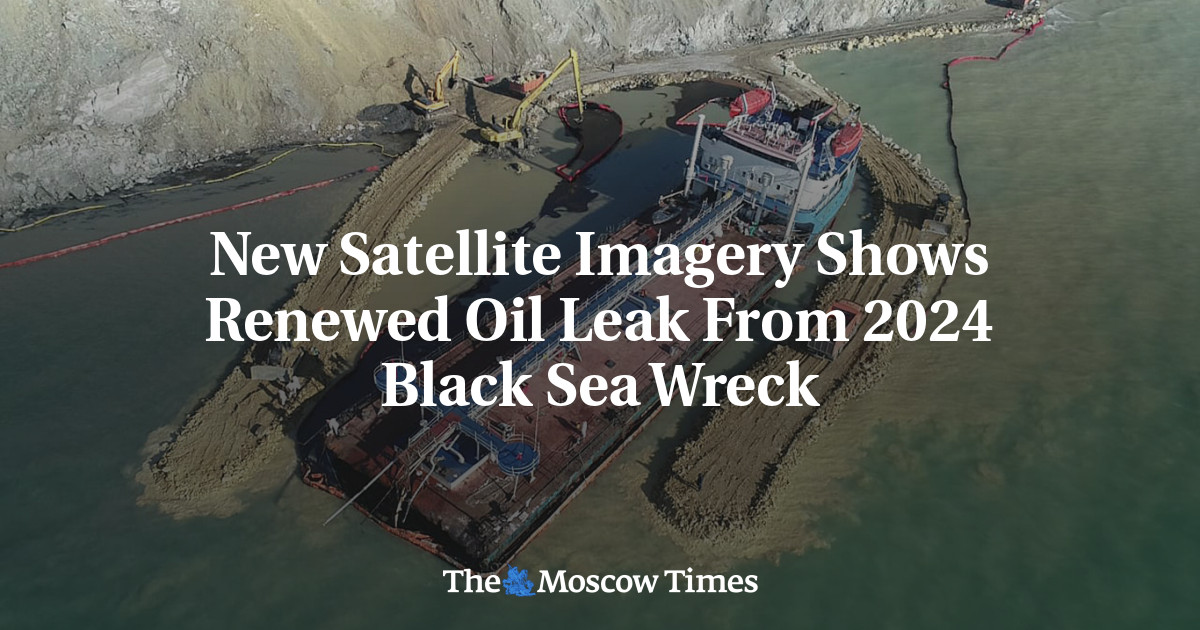
New satellite imagery published this week shows a renewed oil leak near the site of the December 2024 disaster along Russia's southern Black Sea coast, according to monitoring services. On Thursday, the open-source satellite monitoring service Sky Eye reported that slicks consistent with an oil film appeared near the sunken bow of one of the vessels in European radar and optical satellites on July 1 and July 6.
The original wreck released thousands of metric tons of heavy fuel oil, known as mazut, in what has been described as the Black Sea region's worst environmental disaster in decades. Authorities built metal sarcophagi roughly the size of a five-story building over the tankers to isolate and later pump out the remaining mazut.
Sky Eye experts suggested the renewed leak could be triggered by rising water temperatures that heat the trapped mazut, allowing lighter components to escape through structural gaps, or by ongoing operations to pump the remaining fuel out of the tankers. Environmental experts told the exiled outlet Agentstvo that the leak likely began before this week, possibly as early as June. They noted that fuel oil expands five times as much as water and steel when heated, which can force the substance out of the containment structure.
“It leaks, and leaks slowly. We just see it every once in a while,” said Yevgeny Simonov of the Ukraine War Environmental Consequences Work Group. Environmentalist Igor Shkradyuk estimated that several dozen kilograms of mazut may have leaked into the Black Sea, based on the published satellite imagery.
Despite the ongoing leak, Russian authorities have vowed to press on with the 2026 tourist season in the southern Krasnodar region, which is home to vast stretches of beaches popular among Russian vacationers. Officials have approved 75 beaches for reopening as of July 3, with 11 others undergoing review.
/https://i.s3.glbimg.com/v1/AUTH_59edd422c0c84a879bd37670ae4f538a/internal_photos/bs/2026/1/7/HONXx0RRaFdfnF6ok09Q/2026-09-28t183155z-928253705-rc2isna9n4vm-rtrmadp-3-usa-trump-steel.jpg)