Youth protests across Europe: do Baby Boomers really have it better than Gen Z?
Young people in Germany and elsewhere in Europe are demonstrating over fears for their future. DW compared data on pensions, housing, education and climate to see how Gen Z and Baby Boomers fare.
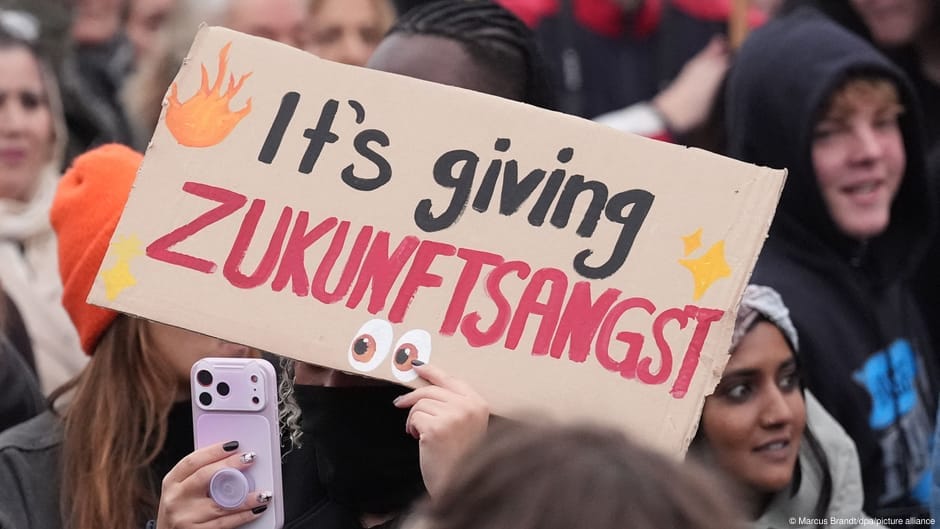
Young people in Germany and other European countries have recently joined street demonstrations, voicing concern about their future. Germany's international broadcaster Deutsche Welle (DW) reviewed statistics on pensions, housing, education and climate change to establish whether Gen Z really faces tougher conditions than the Baby Boomer generation, which grew up in the second half of the 20th century.
Youth researcher Simon Schnetzer, author of the annual Youth in Germany study, says the central question is whether young people have been given the conditions to live and work in the country with confidence and to keep the system funded. His answer is no.
Pensions
In Germany's public pension insurance system there were 3.73 contributors per retiree in 1957, 2.1 in 2025, and the projection for 2045 is 1.73. That means 35.35 million contributors financing pensions for 16.82 million retirees. The system already receives about €118 billion a year in government subsidies, roughly 25% of the federal budget. The number of retirees relying on basic income support rose from 257,000 in 2003 to 738,000 in 2024.
Housing
Data from the German Institute for Economic Research (DIW) show that low-income households' rent burden rose from about 24% of income in 1990 to nearly 36% in 2021. According to Destatis, the Federal Statistical Office, 11% of people spent over 40% of disposable income on housing in 2025, and 35% of those at risk of poverty did. Calculations by the real estate platform Jacasa suggest Boomers own about 4.8 million owner-occupied homes that will change hands in coming decades, which could lower prices in some regions.
Education
Public spending on education per person under 30 has doubled since 2011, from about €4,000 to €8,000 a year. Even so, in 2022 education spending was 4.6% of GDP against an OECD average of 4.7%. The Standing Conference of Education Ministers estimates Germany will be short about 27,000 teachers by 2035.
Climate
The UN says the planet is on course for 2.6°C of warming by 2100. A 2025 study by Vrije University in Brussels found that today's six-year-olds could face heat waves two to seven times as often as Boomers did. The Robert Koch Institute estimates about 16,000 heat-related deaths in Germany by mid-September 2026, over 14,000 of them among people over 65.
Schnetzer says both generations are "in the same boat" and suggests they protest together, followed by a constructive process to set goals everyone can support, even if that requires sacrifices.