New Zealand astrophotographer accused of using AI for satellite image that he says is real
New Zealand astrophotographer Brendan Larsen published an image of about 1,400 satellites above Mount Taranaki, and some viewers dismissed it as AI-generated. He says it was built from 578 photos and documented the process on video.
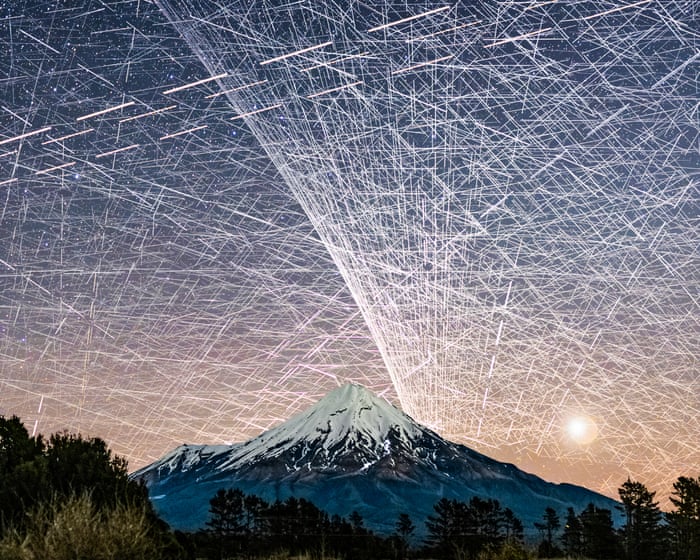
Brendan Larsen, a 51-year-old New Zealand astrophotographer, is defending a night-sky image showing thousands of satellites against claims that it was generated by artificial intelligence. The picture, taken above Mount Taranaki on the North Island, has been viewed millions of times online. The dispute matters because it shows how hard it is becoming to tell real photographs from AI-made ones, and it draws attention to the growing number of satellites in the sky.
How the image was made
In September, Larsen spent two hours photographing the night sky. He set his camera to take an unlimited series of eight-second exposures with a two-second gap between them, which produced 578 photos. He then spent about 40 hours layering the frames in Adobe Photoshop. Each frame held around 25 satellites, and much of the work involved carefully erasing stars so the satellites would stand out.
The finished image shows about 1,400 satellites and 14,000 trails forming a dense crisscross pattern over the mountain.
Accusations and response
Larsen posted the image on his social media channels in mid-October. It gained 15,000 new followers, tens of millions of views and thousands of comments. Some viewers dismissed it as AI. He says he understands why, since image-generating software is getting so good that real and fake pictures are hard to tell apart, though he finds it frustrating. He also finds it exasperating that his image has been downloaded and recreated by AI with obvious flaws. Expecting the accusations, he filmed his creative process.
Concern over the night sky
Larsen says he was amazed by the number of stars over rural New Zealand as a child, but in the six years he has photographed the sky he has noticed more light pollution and more satellites. He says nine out of ten comments on his Facebook page express alarm about what is happening to the night sky.
About 16,000 working satellites orbit Earth, along with tens of thousands of defunct spacecraft, rocket parts and debris. Studies warn that metal particles from rocket launches and satellite reentries could affect atmospheric chemistry and the ozone layer, while the UN has warned of risks to ground safety, darkness and astronomy. Larsen hopes the image will spark debate on using satellites responsibly.

